Oculoplasty: Advanced Care for Eyelid, Orbit, and Tear Duct Disorders
18 March, 2026
The eyes are not only essential for vision but also play a major role in facial appearance and expression. Conditions affecting the eyelids tear ducts, and eye socket can impact both eye function and appearance. Oculoplasty, also known as oculoplastic surgery, is a specialized branch of ophthalmology that focuses on the medical and surgical management of these delicate structures.
What Is Oculoplasty?
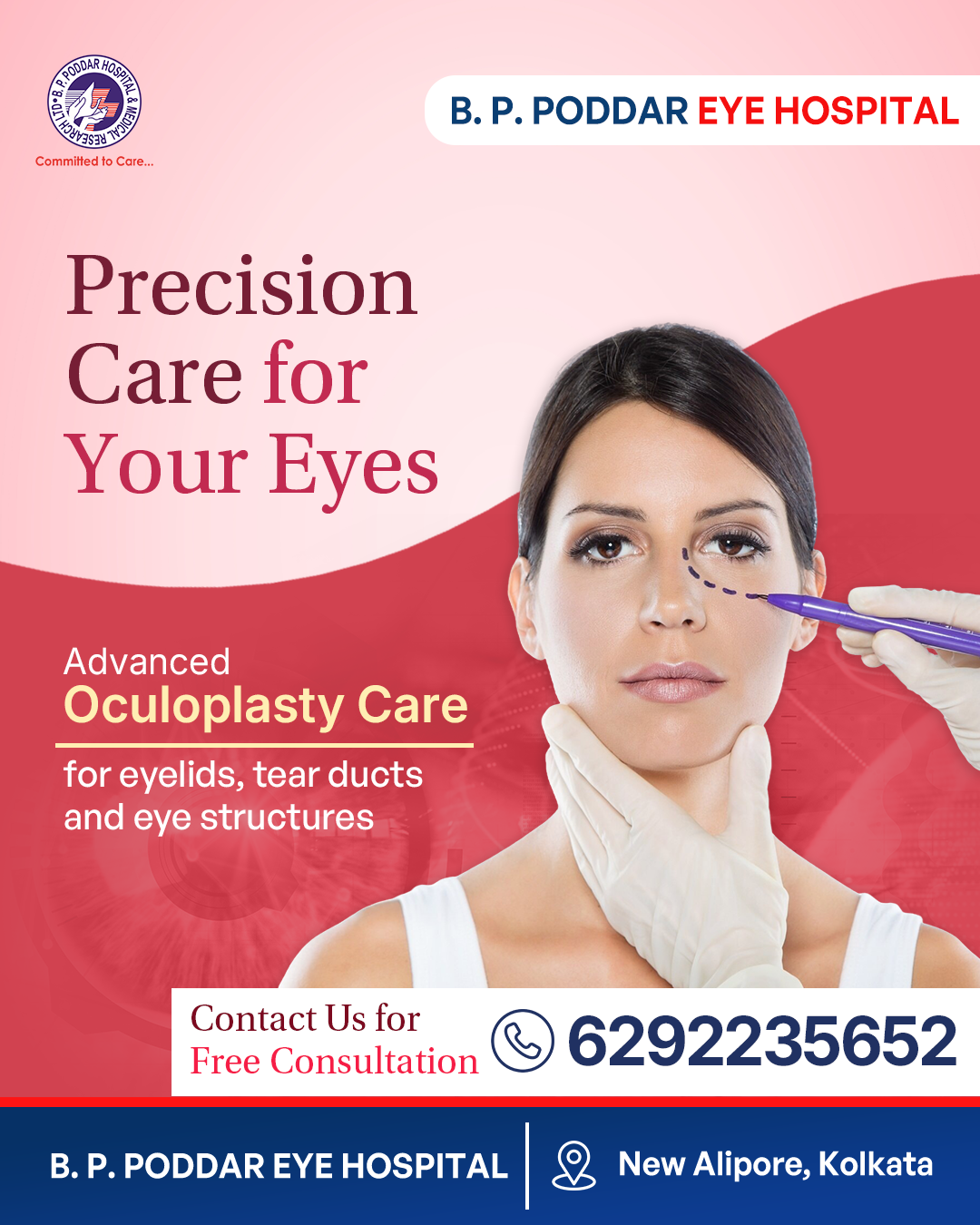
Oculoplasty is a subspecialty of ophthalmology that deals with disorders of the eyelids, lacrimal (tear drainage) system, orbit (eye socket), and surrounding facial structures. Oculoplastic procedures are performed by specially trained eye surgeons using advanced techniques to restore function, comfort, and appearance.
Conditions Treated with Oculoplasty
Oculoplastic surgery is recommended for a wide range of functional and cosmetic eye conditions, including:
- Drooping Eyelids (Ptosis)
- Eyelid Malpositions (Entropion and Ectropion)
- Blocked Tear Ducts (Nasolacrimal Duct Obstruction)
- Watery Eyes (Epiphora)
- Eyelid Tumors and Cysts
- Thyroid Eye Disease
- Orbital Infections and Tumors
- Eye Trauma and Facial Injuries
Early diagnosis and expert treatment help prevent discomfort, infection, and vision-related complications.
Common Oculoplastic Procedures
- Ptosis Surgery –Corrects drooping eyelids to improve vision and appearance.
- Entropion and Ectropion Repair –Surgical correction of inward or outward turning eyelids to prevent irritation and corneal damage.
- Tear Duct Surgery (DCR) –Dacryocystorhinostomy (DCR) is performed to treat blocked tear ducts and relieve persistent watering and infections.
- Eyelid Tumor Removal –Safe and precise removal of benign or malignant eyelid tumors with reconstruction when required.
- Orbital Surgery –Treatment of orbital tumors, infections, fractures, and thyroid eye disease to restore eye function and alignment.
Benefits of Oculoplasty
- Restores normal eyelid function
- Improves eye comfort and vision
- Enhances facial appearance
- Prevents recurrent eye infections
- Uses minimally invasive techniques when possible
- Provides both functional and cosmetic benefits
What to Expect Before and After Oculoplastic Surgery
Pre-operatively, patients are assessed for their eyes and face. Most oculoplastic surgeries are done on a day-care basis and under local or general anesthesia. After surgery, some patients may experience mild swelling or bruising, which settles within a short time.
Why Choose Our Hospital for Oculoplasty?
Our hospital offers comprehensive oculoplastic care and free consultation supported by:
- Skilled and experienced oculoplastic surgeons
- Advanced surgical and imaging technology
- High standards of safety and precision
- Personalized treatment planning
- Compassionate, patient-focused care
We aim to deliver natural-looking results while prioritizing eye health and patient comfort.
When Should You Consult an Oculoplasty Specialist?
You should seek expert care if you experience:
- Drooping or misaligned eyelids
- Excessive tearing or recurrent infections
- Eyelid swelling, lumps, or growths
- Eye socket pain or bulging eyes
- Facial or eye injuries affecting appearance or vision
Restoring Comfort, Function, and Confidence with Oculoplasty
Oculoplasty combines medical expertise with surgical precision to treat complex eye and facial conditions effectively. If you are experiencing eyelid, tear duct, or orbital problems, our specialists are here to help.
Book your oculoplasty consultation today for expert care and lasting results.
Contact
B. P. Poddar Eye Hospital for free consultation.


 NABH Accredited Hospital