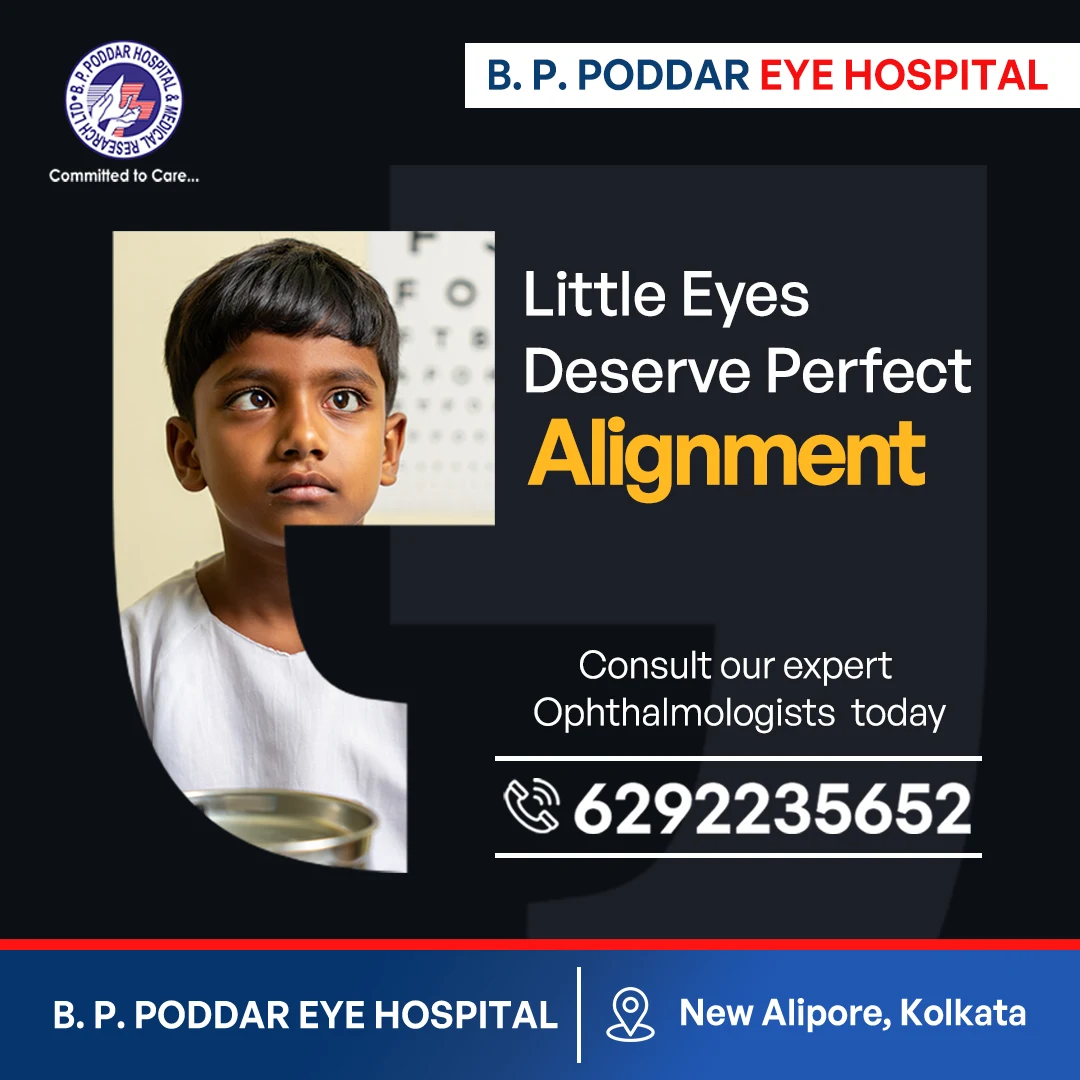
Squint (Strabismus): Early Diagnosis and Effective Treatment for Proper Eye Alignment
27 February, 2026
Squint, also known as strabismus, is a condition where the eyes are not aligned in the same direction. In squint, one eye may look straight ahead, while the other eye turns inward, outward, upward, or downward. Squint can occur in children as well as in adults. If left untreated, squint can cause vision problems as well as low self-confidence.
What Is Squint (Strabismus)?
Squint or strabismus is a condition where the eye muscles are not able to coordinate properly, leading to misalignment of the eyes. This condition can be constant or intermittent and can affect one or both eyes. It is important that this condition be diagnosed and treated as early as possible, especially in children, to allow for proper visual development.
Types of Squint
Squint is classified based on the direction of eye deviation:
- Esotropia – Inward turning of the eye
- Exotropia – Outward turning of the eye
- Hypertropia – Upward deviation of the eye
- Hypotropia – Downward deviation of the eye
Each type requires a detailed eye examination for accurate diagnosis and management.
Causes of Squint
Squint can occur due to various reasons, including:
- Imbalance in eye muscles
- Uncorrected refractive errors
- Congenital or developmental conditions
- Neurological or systemic disorders
- Eye injury or trauma
- Poor vision in one eye (amblyopia)
Identifying the underlying cause helps in planning the most effective treatment.
Symptoms of Squint
Common signs and symptoms include:
- Misaligned or crossed eyes
- Double vision
- Eye strain or headaches
- Poor depth perception
- Tilting or turning the head to see clearly
- Reduced vision in one eye (lazy eye)
Parents should seek evaluation if they notice any eye deviation in their child.
Squint Treatment Options
Treatment for squint depends on the age of the patient, type of squint, and underlying cause:
- Spectacles –Correcting refractive errors can help align the eyes in many cases, especially in children.
- Amblyopia (Lazy Eye) Therapy –Patching or vision therapy is used to improve vision in the weaker eye.
- Squint Surgery –involves adjusting the eye muscles to correct eye alignment and improve binocular vision.
- Vision Therapy –Exercises and therapies help improve eye coordination and focusing ability in selected cases.
Benefits of Early Squint Treatment
- Improved eye alignment
- Better visual development in children
- Prevention of permanent vision loss
- Improved depth perception
- Enhanced facial appearance and confidence
Early treatment leads to better functional and cosmetic outcomes.
Why Choose Our Hospital for Squint Treatment?
Our hospital offers comprehensive free consultation and squint evaluation and treatment with:
- Experienced pediatric and adult squint specialists
- Advanced diagnostic tools
- Customized treatment planning
- Safe and effective squint surgery
- Child-friendly and patient-focused care
We ensure accurate diagnosis and long-term follow-up for the best results.
When Should You Consult an Eye Specialist for Squint?
Consult an eye specialist if you notice:
- Eye misalignment at any age
- Squint in infants beyond 4–6 months
- Sudden onset of squint in adults
- Double vision or visual discomfort
- Correcting Squint for Better Vision and Confidence
Squint is a treatable eye condition, and timely intervention can significantly improve vision and appearance. With expert care and advanced treatment options, proper eye alignment can be achieved at any age.
Book a squint evaluation today and take the first step toward healthier, aligned vision.
Contact
B. P. Poddar Eye Hospital for free consultation today.


 NABH Accredited Hospital