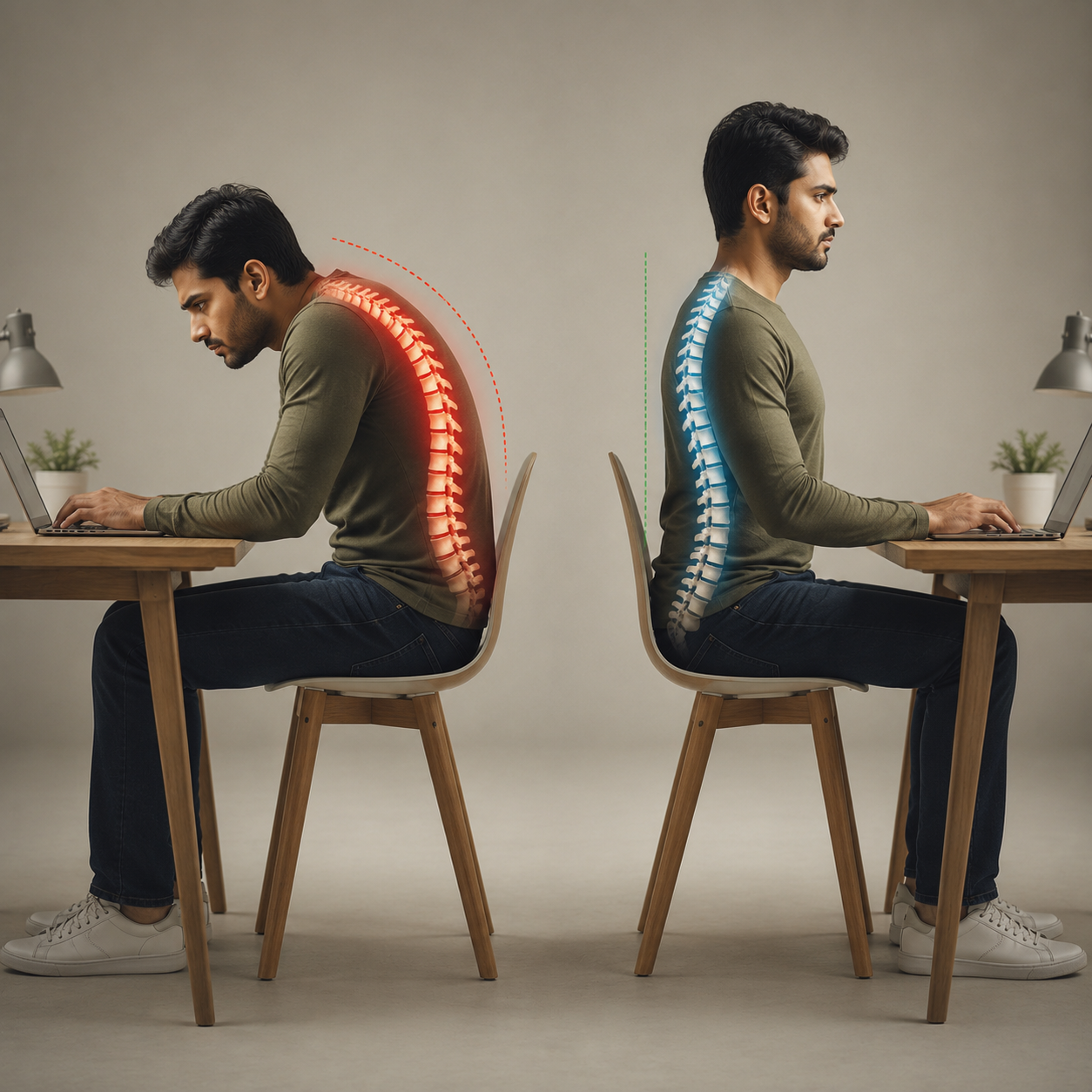
The Silent Impact of Poor Posture: How It Affects Your Spine Over Time
11 July, 2026
However, the modern age of technology requires most of us to sit for hours on end at a desk, stare down at a cell phone, or work on a laptop. Even though they do not appear to be too problematic, such behaviors can exert undue stress on the spine.
Proper posture goes beyond simply standing up straight; it is an essential part of spine health.
What Is Poor Posture?
Poor posture results from the misalignment of the body while sitting, standing, walking, or lying down. This can lead to excessive pressure on the spinal column and muscles over a long period of time.
Examples of poor postures are:
- Slouching while seated
- Facing forward while using a phone/laptop
- Sitting in a chair for a long time without back support
- Stance that does not distribute weight equally
- Carrying a bag on one side
How Poor Posture Affects Your Spine
Your spine is naturally designed with gentle curves that help distribute body weight evenly. Poor posture disrupts this alignment, forcing certain muscles and joints to work harder than they should.
Over time, this may lead to:
- Persistent neck pain
- Upper and lower back pain
- Shoulder stiffness
- Muscle fatigue
- Reduced flexibility
- Frequent headaches caused by muscle tension
- Increased pressure on spinal discs, raising the risk of disc-related problems
If left unaddressed, poor posture can contribute to chronic pain and affect your daily activities.
Who Is Most at Risk?
Poor posture can affect people of all ages, but it is especially common among:
- Office professionals
- Students attending online or classroom sessions
- Drivers
- Individuals who use smartphones for long periods
- People working from home without ergonomic furniture
- Older adults with reduced muscle strength
Warning Signs You Shouldn't Ignore
Your body often gives early signals before posture-related problems become severe.
Watch out for:
- Neck or back pain after sitting for long periods
- Rounded shoulders
- Frequent stiffness in the neck or back
- Difficulty maintaining an upright posture
- Tingling or numbness in the arms or legs
- Pain that worsens during work or after prolonged screen time
If these symptoms persist despite rest, consult a spine specialist for proper evaluation.
Simple Habits to Protect Your Spine
Small lifestyle changes can make a significant difference in maintaining spinal health.
Maintain Proper Sitting Posture
Keep your back supported, shoulders relaxed, and feet flat on the floor. Your computer screen should be at eye level to avoid bending your neck.
Take Regular Movement Breaks
Avoid sitting continuously for hours. Stand, stretch, or walk for a few minutes every 30–60 minutes.
Strengthen Your Core
Exercises that strengthen the abdominal and back muscles help support the spine and improve posture.
Stretch Daily
Regular stretching improves flexibility and reduces muscle tightness caused by prolonged sitting.
Sleep in a Spine-Friendly Position
Use a supportive mattress and pillow that help maintain the natural alignment of your neck and spine.
Limit "Text Neck"
Hold your phone closer to eye level instead of constantly bending your neck downward.
When Should You See a Spine Specialist?
While occasional discomfort may improve with posture correction, persistent or worsening symptoms should never be ignored.
Seek medical attention if you experience:
- Back or neck pain lasting several weeks
- Pain radiating into the arms or legs
- Numbness, tingling, or weakness
- Difficulty walking or maintaining balance
- Pain following an injury or fall
Early diagnosis can help identify the underlying cause and prevent further complications.
Advanced Spine Care for Better Mobility
Most posture-related spine problems can be effectively managed with the right combination of lifestyle changes and medical care.
- Lifestyle Modification: Maintain good posture, avoid prolonged sitting, and follow ergonomic practices to reduce strain on the spine.
- Regular Exercise: Daily stretching and strengthening exercises help improve flexibility and support spinal health.
- Physiotherapy: Helps relieve pain, improve posture, strengthen muscles, and restore mobility.
- Neuromicroscopic Spine Surgery: In cases where surgery is needed, modern neuromicroscopic spine surgery uses an incision of approximately 1 inch, offering minimal pain, faster recovery, and an early recovery which helps patient to return their daily life after surgery day.
Conclusion
Poor posture may seem like a minor habit, but over time it can significantly impact your spinal health and quality of life. By making simple adjustments to your daily routine and seeking timely medical advice when symptoms persist, you can protect your spine and prevent long-term complications.
Your spine supports you every day—taking care of it today can help you stay active and pain-free for years to come.
Contact
B. P. Poddar Hospital & Medical Research Limited for you or your loved ones


 NABH Accredited Hospital