Complete Cancer Care Under One Roof: From Diagnosis to Recovery
24 August, 2026
A cancer diagnosis can lead to many questions. Which tests are required? Has the disease spread? Will treatment involve surgery, chemotherapy or radiation? Which specialist should be consulted first?
Cancer rarely belongs to a single medical discipline. Effective treatment may require radiologists, pathologists, medical oncologists, surgical oncologists, radiation oncologists and supportive-care professionals to work together.
Complete
cancer care in Kolkata connects these services through a coordinated pathway—from initial diagnosis and staging to treatment, rehabilitation and follow-up.
Stage One: Accurate Cancer Diagnosis
The first step is to determine whether cancer is present and, if so, identify its type and extent. Depending on the symptoms and suspected cancer, doctors may recommend:
- Blood and laboratory investigations
- Ultrasonography and mammography
- CT, MRI or PET-CT
- Endoscopy or other organ-specific investigations
- FNAC, core biopsy or surgical biopsy
- Histopathology and immunohistochemistry
- Molecular or genetic testing where clinically indicated
Imaging can locate a suspicious lesion and assess its extent, but a biopsy is often required for definitive diagnosis. Pathology establishes the type and grade of the tumour, while molecular investigations may identify biomarkers that influence treatment.
The hospital’s
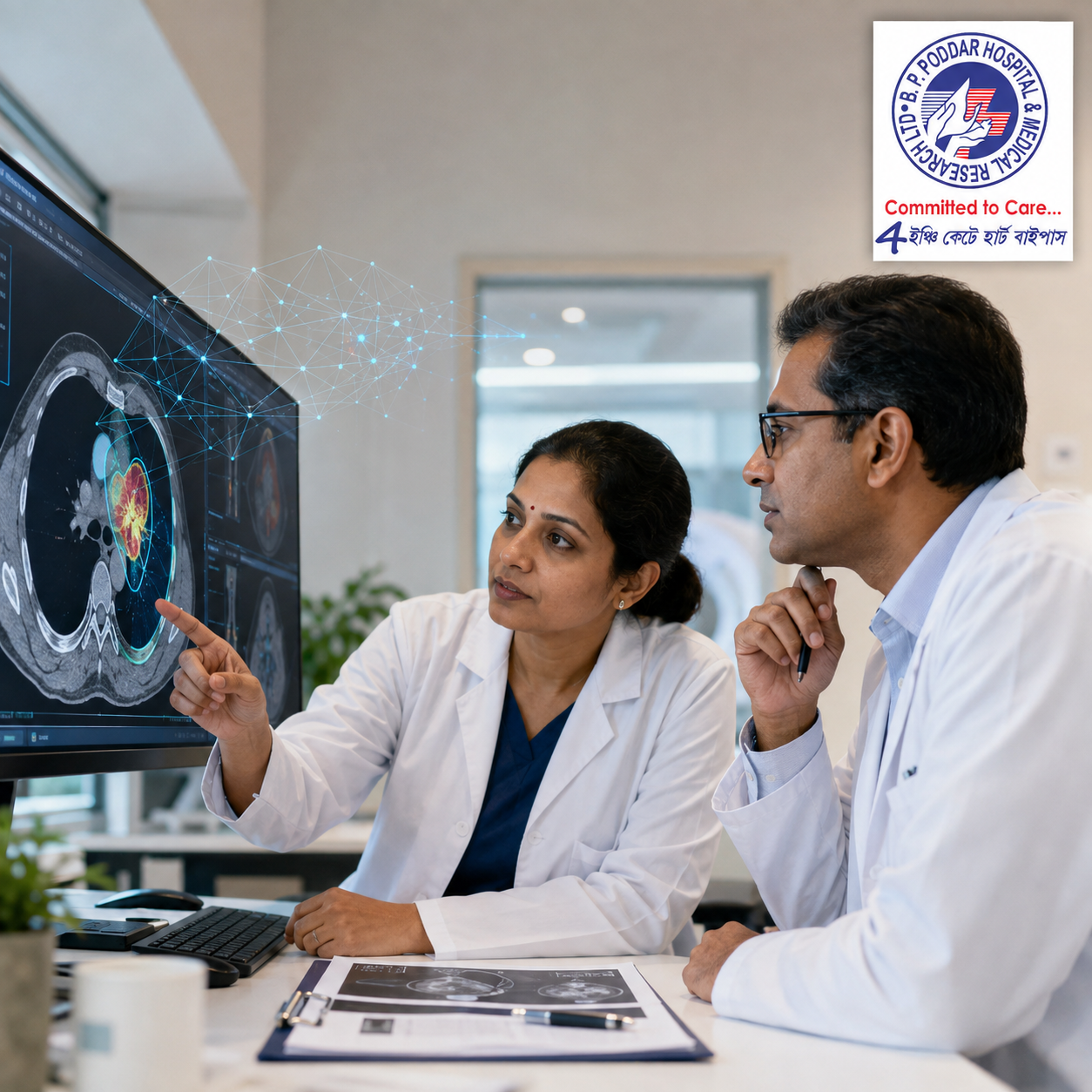
Diagnostic Oncology services support screening, diagnosis, staging, treatment planning and response monitoring through imaging, laboratory medicine, pathology and nuclear medicine.
Stage Two: Cancer Staging
After confirming the diagnosis, the clinical team determines the stage of the cancer. Staging helps doctors understand the size of the primary tumour, whether nearby lymph nodes are involved, whether the disease has spread, whether surgery is feasible and which combination of treatments may be appropriate.
Accurate staging matters because two patients with the same cancer type may require different treatment plans depending on the disease’s extent and biological behaviour.
Stage Three: Multidisciplinary Tumour-Board Planning
A tumour board brings specialists from different oncology disciplines together to review the patient’s findings. The discussion may involve medical oncologists, surgical oncologists, radiation oncologists, radiologists, nuclear-medicine specialists, pathologists, organ-specific specialists and supportive-care professionals.
The team evaluates the diagnosis, stage, molecular profile, overall health and personal priorities of the patient. The objective is not simply to select a treatment but to decide the most appropriate sequence. One patient may require surgery first, while another may benefit from chemotherapy or radiation before an operation.
Stage Four: Medical Oncology
Medical oncology uses medicines that travel through the body to destroy cancer cells, restrict their growth or influence the biological pathways supporting the disease.
Chemotherapy
Chemotherapy uses anti-cancer medicines to destroy rapidly dividing cells. It may be given before surgery, after surgery, alongside radiation or as the principal treatment for certain cancers.
Targeted Therapy
Targeted therapy acts on specific genes, proteins or pathways involved in cancer growth. Molecular testing may be required to determine whether a patient is likely to benefit.
Immunotherapy
Immunotherapy helps the immune system recognise or attack cancer cells. Suitability depends on the cancer type, stage, relevant biomarkers and the patient’s overall condition.
Hormone Therapy
Hormone therapy may be used for hormone-sensitive cancers, including selected breast and prostate cancers.
The
Medical Oncology Department provides systemic treatment through day-care or inpatient pathways according to clinical need, supported by monitoring, transfusion medicine and symptom management.
Stage Five: Surgical Oncology
Surgery may be used to remove the primary tumour, assess or remove lymph nodes, preserve an affected organ where oncologically appropriate, relieve symptoms or reconstruct appearance and function after tumour removal.
Modern surgical oncology aims to balance cancer control with safe minimal invasiveness and organ preservation where feasible. Depending on the condition, procedures may include breast-conservation surgery, minimally invasive abdominal cancer surgery, nephron-sparing kidney surgery, sphincter-preserving colorectal surgery and limb-salvage surgery.
The
Surgical Oncology Department offers cancer surgery supported by advanced operating theatres, pathology and multidisciplinary planning.
Stage Six: Radiation Oncology
Radiation therapy uses high-energy radiation to damage cancer cells and limit their ability to grow. It may be used as the primary treatment, before surgery to reduce tumour size, after surgery to reduce recurrence risk, alongside chemotherapy or to relieve symptoms in advanced cancer.
Modern image-guided techniques allow radiation oncologists to shape and guide treatment according to the tumour’s position while protecting nearby healthy tissue as far as possible. The
Radiation Oncology Department coordinates simulation, planning, treatment delivery and verification according to individual clinical need.
Stage Seven: Supportive and Holistic Care
Complete cancer care extends beyond treating the tumour. Patients may need support for the physical, nutritional, functional and emotional effects of cancer and its treatment.
Supportive services may include:
- Oncology nutrition
- Nausea and side-effect management
- Pain and symptom control
- Infection prevention and transfusion support
- Psycho-oncology counselling
- Physiotherapy and rehabilitation
- Speech or swallowing rehabilitation
- Palliative care and survivorship guidance
Introducing supportive care early can help patients manage treatment and maintain the best possible quality of life.
Why Coordinated Care Matters
When diagnosis and treatment services operate within an integrated system, different specialists can review the same clinical information and communicate more efficiently.
Potential advantages include:
- Better coordination between departments
- Timely access to necessary investigations
- A clearly sequenced treatment plan
- Less avoidable duplication of tests
- Easier monitoring of treatment response
- Continuity from diagnosis to follow-up
- Greater clarity for patients and families
Complete Cancer Care at B. P. Poddar Hospital
The
B. P. Poddar Hospital Cancer Unit brings together diagnostic oncology, medical oncology, surgical oncology, radiation oncology and supportive care.
Every patient’s treatment depends on the type and stage of cancer, molecular findings, overall health and individual priorities. There is no universal cancer treatment plan.


 NABH Accredited Hospital