What Does AI-Assisted Cancer Care Actually Mean?
20 August, 2026
Artificial intelligence is transforming several areas of healthcare, including oncology. However, the expression “AI-assisted cancer care” is often misunderstood. It does not mean that a machine independently diagnoses cancer or decides a patient’s treatment. Instead, AI provides clinicians with an additional layer of analytical support while qualified specialists remain responsible for every medical decision.
At
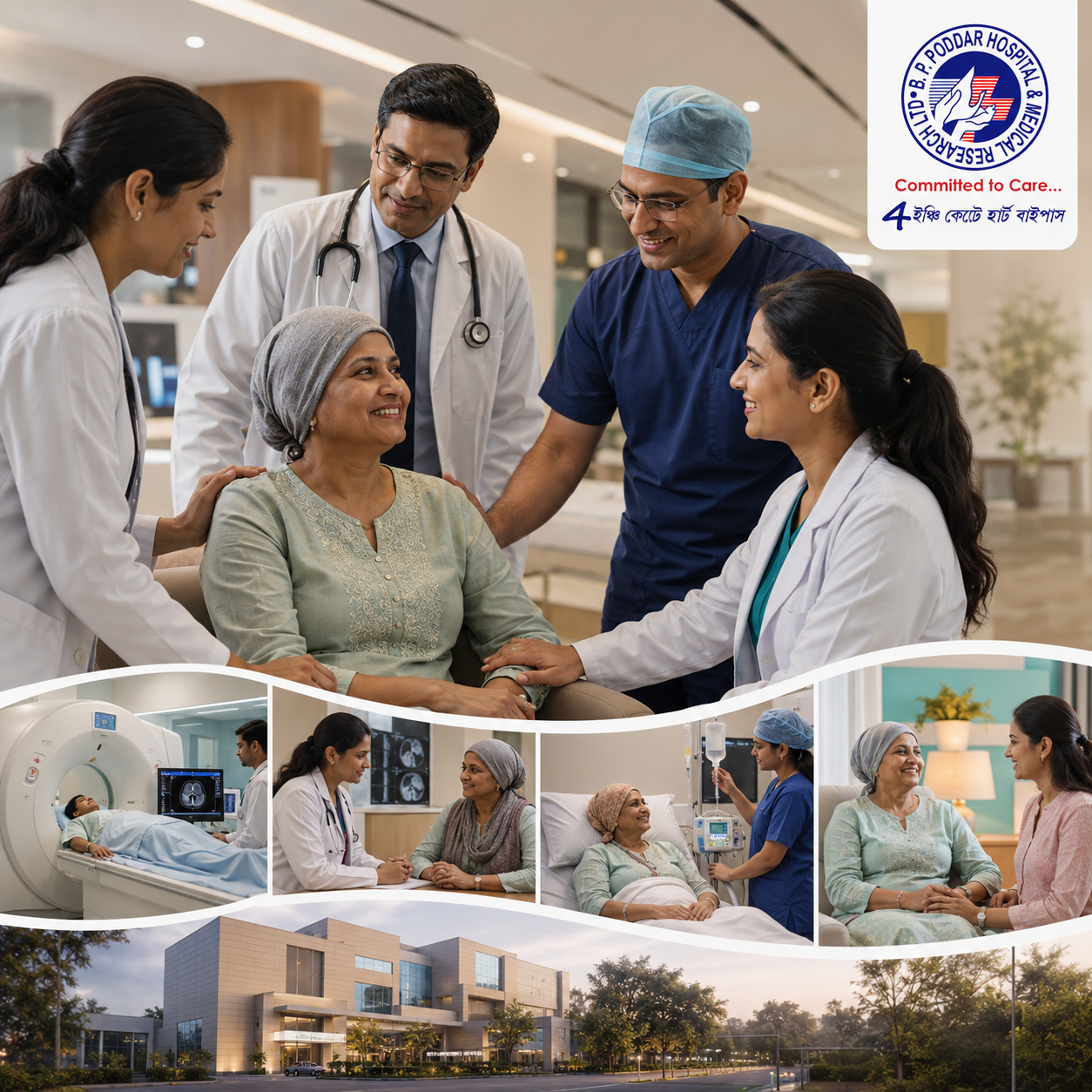
B. P. Poddar Hospital Cancer Unit, advanced technology, diagnostic services and multidisciplinary expertise come together to support comprehensive, personalised cancer care in Kolkata.
What Is AI-Assisted Cancer Care?
AI-assisted cancer care involves specialised computer-based systems that analyse complex medical information, recognise patterns and support clinical decision-making. The precise role depends on the validated technology available and the clinical setting in which it is used.
Depending on the system, AI may assist with:
- Analysing medical images and highlighting areas that require closer review
- Mapping the size, shape and location of a tumour
- Supporting radiotherapy contouring and treatment planning
- Organising pathology, molecular and clinical information
- Comparing current findings with established medical data
- Monitoring changes in a tumour during or after treatment
AI output must always be interpreted within the patient’s complete clinical context. It is a support tool—not an independent replacement for medical expertise.
How AI Can Support Different Stages of Cancer Care
1. Cancer Detection and Medical Imaging
Medical imaging plays an important role in detecting, locating and staging cancer. Depending on the suspected condition, doctors may recommend mammography, ultrasonography, CT, MRI, PET-CT or other specialised investigations.
AI-assisted imaging systems can help radiologists review large volumes of image data and flag areas that may deserve closer examination. They may also support comparison between current and earlier scans. The radiologist remains responsible for the final interpretation and for correlating the images with the patient’s symptoms, examination and other reports.
2. Pathology and Molecular Diagnosis
A biopsy is often required to confirm whether a suspicious growth is cancerous. The collected tissue may undergo histopathology, immunohistochemistry and, where indicated, molecular testing.
These investigations can help determine:
- The type and grade of cancer
- Receptor status and relevant biomarkers
- Genetic or molecular alterations
- The probable biological behaviour of the tumour
Whether targeted therapy or immunotherapy may be appropriate
AI-based analytical systems are being used and studied for their ability to identify patterns in pathology slides and complex molecular data. Nevertheless, the pathologist and treating oncologist remain central to interpreting the findings.
3. Personalised Treatment Planning
Cancer treatment is never based on the diagnosis alone. Doctors also consider the cancer’s stage, location, molecular characteristics, previous treatment, the patient’s overall health and individual priorities.
AI-assisted systems may help organise these different data points and make complex information easier for the multidisciplinary team to review. This can support a more personalised discussion involving medical oncologists, surgical oncologists, radiation oncologists, radiologists, pathologists and supportive-care specialists.
4. Radiation Therapy Planning
Radiation therapy requires a high degree of accuracy. The treatment team must deliver the prescribed dose to the tumour while limiting exposure to nearby healthy organs.
Modern radiation techniques can support focused treatment, while computer-assisted contouring, image analysis, dose calculation and treatment verification may strengthen planning and quality assurance. Every plan must be reviewed, approved and monitored by the radiation oncology team.
Potential Benefits for Patients
When appropriately validated and used under specialist supervision, AI-assisted technology may support:
- More detailed analysis of complex medical information
- Greater consistency in selected clinical workflows
- More individualised treatment planning
- Precise localisation of a tumour and nearby organs
- Faster organisation of diagnostic information
- Closer monitoring of changes during treatment
- Better coordination among different specialists
These tools support clinical care, but they cannot guarantee a diagnosis, treatment response or outcome.
Does AI Replace the Oncologist?
No. AI cannot understand a patient’s complete medical, emotional and personal circumstances in the way a treating specialist does. The oncologist considers symptoms, physical condition, other illnesses, previous treatments, possible side effects, quality-of-life priorities and the patient’s own preferences.
AI may assist with analysing information, but responsibility for diagnosis, counselling, treatment selection and follow-up remains with the clinical team.
Complete Cancer Care Requires More Than Technology
Technology alone cannot provide complete cancer care. A comprehensive cancer programme must connect diagnosis, medical oncology, surgical oncology, radiation oncology and supportive services through a coordinated pathway.
The
B. P. Poddar Hospital Cancer Unit brings together diagnostic evaluation, pathology, imaging, systemic therapy, cancer surgery, radiation oncology, nutrition, pain and symptom management, rehabilitation, palliative care and follow-up according to individual need.
Questions Patients Should Ask
- At which stage of my care is AI being used?
- What information does the technology analyse?
- Who reviews and validates its findings?
- How could the output influence my treatment plan?
- What are the limitations of the technology?
- What other diagnostic or treatment options are available?
AI-Assisted. Specialist-Led. Patient-Focused.
The future of oncology lies in combining technological intelligence with clinical judgement and compassionate care. AI can help specialists process complex information, but it is the multidisciplinary cancer team that understands the individual behind the diagnosis.
Frequently Asked Questions
Can AI diagnose cancer on its own?
No. AI may identify patterns or flag suspicious findings, but a qualified specialist must interpret the results. A biopsy and pathology examination are often required to confirm cancer.
Does AI decide which cancer treatment I should receive?
No. Treatment is decided by the clinical team after considering the cancer type, stage, biomarkers, overall health, previous treatment and the patient’s priorities.
Is AI-assisted cancer care suitable for every patient?
Not necessarily. The usefulness of any AI-assisted system depends on the specific clinical question, the validated technology available and the patient’s individual circumstances.
Will AI-assisted care improve my outcome?
AI may support analysis, planning and workflow consistency, but it cannot guarantee a particular treatment response or outcome.
Book a Consultation
For a cancer consultation or second opinion, contact B. P. Poddar Hospital and speak with the oncology team. Please carry all available reports, imaging and biopsy records.
This article is intended for general awareness and does not replace consultation with a qualified medical professional.


 NABH Accredited Hospital