Achalasia Cardia: Understanding the Condition, Symptoms and Advanced Treatment Options
19 August, 2026
Difficulty in swallowing is sometimes considered a minor digestive issue. However, if the problem continues and becomes more persistent, there might be a possibility that the patient has some form of disorder related to his food pipe. One such example would be achalasia cardia, which may make it hard for patients to swallow both food and liquids smoothly.
Due to advances in gastroenterology, there are several treatment methods for patients suffering from achalasia. One of the many treatments for this disorder includes POEM, which stands for Peroral Endoscopic Myotomy.
What Is Achalasia Cardia?
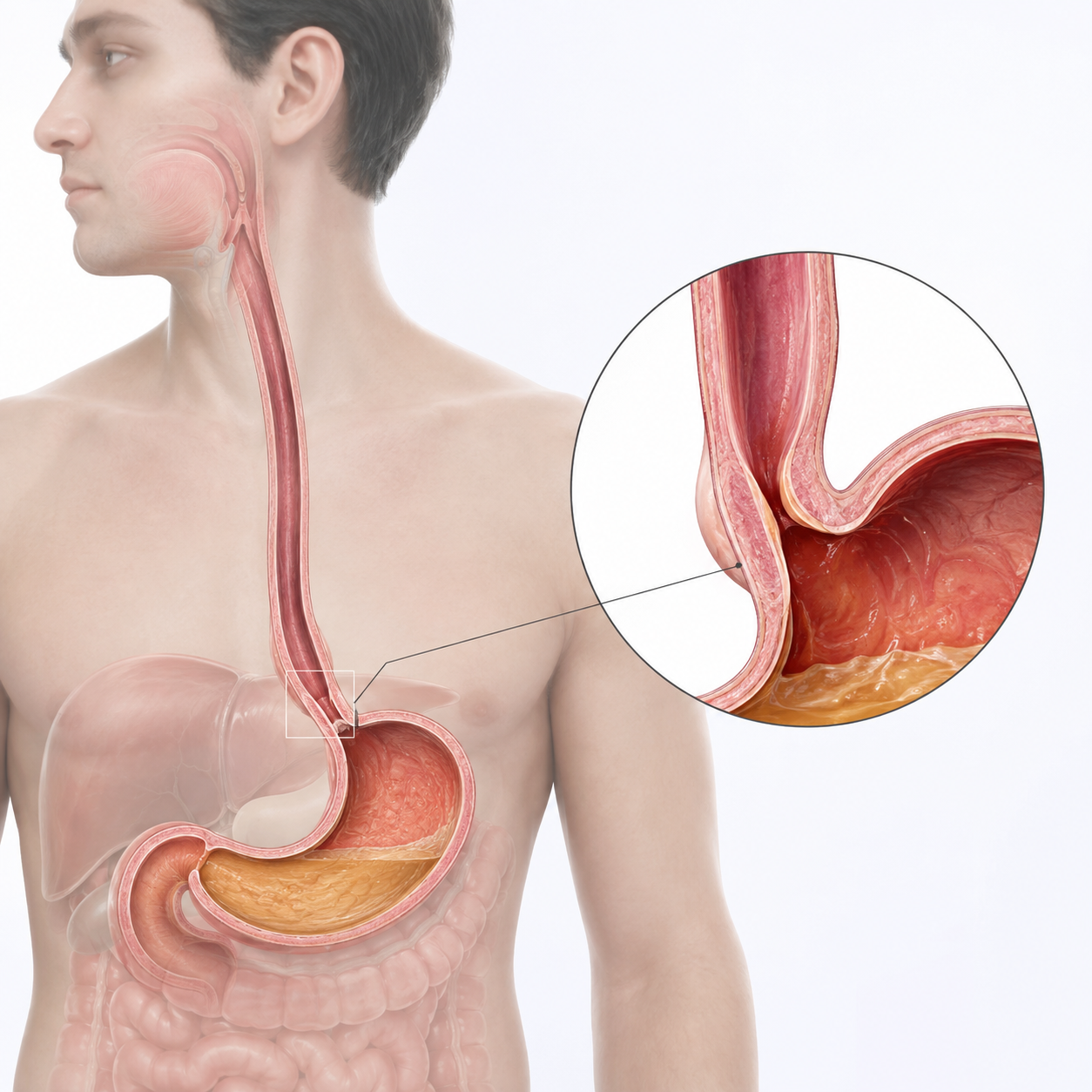
Achalasia Cardia is an esophageal (food pipe) problem, where there is difficulty in the relaxation of the lower esophageal sphincter, the muscular valve that is between the esophagus and stomach. The role of the muscle is to open so that food and liquid may be allowed into the stomach.
However, because of malfunctioning of the nerves of the esophagus, this cannot be done. Food is therefore unable to move from the esophagus into the stomach.
Common Symptoms of Achalasia
The symptoms of achalasia can develop gradually, which is why they may sometimes be mistaken for acidity or other digestive conditions.
Common symptoms include:
- Difficulty swallowing food or liquids
- A sensation of food getting stuck in the chest
- Regurgitation of undigested food or liquids
- Chest discomfort or pain
- Persistent cough, particularly at night
- Unintentional weight loss
- Heartburn-like symptoms
- Difficulty eating normally
If swallowing difficulty continues or becomes progressively worse, a gastroenterology evaluation can help identify the underlying cause.
What Causes Achalasia?
The exact cause of achalasia is not completely understood. It is associated with damage or degeneration of the nerve cells responsible for coordinating movement and relaxation of the esophagus.
Because the condition affects the normal movement of food through the digestive tract, diagnosis generally requires specialized evaluation. Doctors may recommend investigations such as
upper gastrointestinal endoscopy, esophageal manometry and imaging studies depending on the patient's symptoms.
How Is Achalasia Cardia Treated?
Treatment for achalasia focuses on reducing the pressure at the lower end of the esophagus and improving the passage of food into the stomach.
Depending on the severity of the condition and the patient's overall health, treatment may include:
Medicines
Certain medicines can temporarily reduce pressure in the lower esophageal sphincter. However, their effectiveness may be limited and they are generally not considered a definitive solution for everyone.
Pneumatic Balloon Dilatation
During this procedure, a specialized balloon is used to stretch the lower esophageal sphincter. It can improve swallowing in many patients, although repeat treatment may sometimes be required.
Heller's Myotomy
Heller's myotomy is a surgical procedure in which the muscles of the lower esophageal sphincter are divided to allow food to pass more easily into the stomach. It has been an established treatment for achalasia for many years.
POEM Surgery
Peroral Endoscopic Myotomy (POEM) is a minimally invasive endoscopic treatment for achalasia cardia. Instead of making a large external incision, the procedure is performed through the mouth using an endoscope.
During POEM, the specialist creates a small tunnel within the esophageal wall and carefully divides the muscles responsible for the abnormal resistance to food passage. This helps improve the opening between the esophagus and stomach.
Why Is POEM Considered an Advanced Treatment for Achalasia?
One of the key advantages of
POEM for achalasia is that the procedure is performed internally through an endoscope rather than through a large surgical incision.
Depending on the patient's condition and medical assessment, potential benefits may include:
- No large external surgical incision
- No visible abdominal scar from conventional surgery
- Minimally invasive approach
- Reduced surgical trauma
- Faster recovery in suitable patients
- Earlier return to regular activities
POEM may be particularly valuable for selected patients with different types of achalasia, including cases where the esophageal muscles are significantly affected.
Diagnosis Is the First Step
Persistent swallowing difficulty should not be ignored. Since symptoms of achalasia can resemble other gastrointestinal conditions, an accurate diagnosis is essential before deciding on treatment.
A gastroenterologist may assess the patient's symptoms and recommend appropriate tests to understand how the esophagus and lower esophageal sphincter are functioning.
Once the diagnosis is confirmed, the treatment approach can be personalised according to the type and severity of achalasia, the patient's medical history and other clinical factors.
Get Expert Care for Achalasia Cardia
Living with difficulty swallowing can affect nutrition, daily activities and overall quality of life. Fortunately, advances in
minimally invasive gastroenterology have expanded treatment options for patients with achalasia cardia.
If you experience persistent difficulty swallowing, food regurgitation, unexplained weight loss or a recurring sensation of food getting stuck, consult a qualified
gastroenterology specialist for evaluation.
At
B. P. Poddar Hospital & Medical Research Ltd., advanced gastroenterology care is available for the diagnosis and management of conditions affecting the digestive system, including achalasia cardia. The appropriate treatment is determined after a detailed evaluation of each patient.
Don't let persistent swallowing difficulty become a part of everyday life. Expert evaluation can help identify the cause and guide you towards the right treatment.


 NABH Accredited Hospital