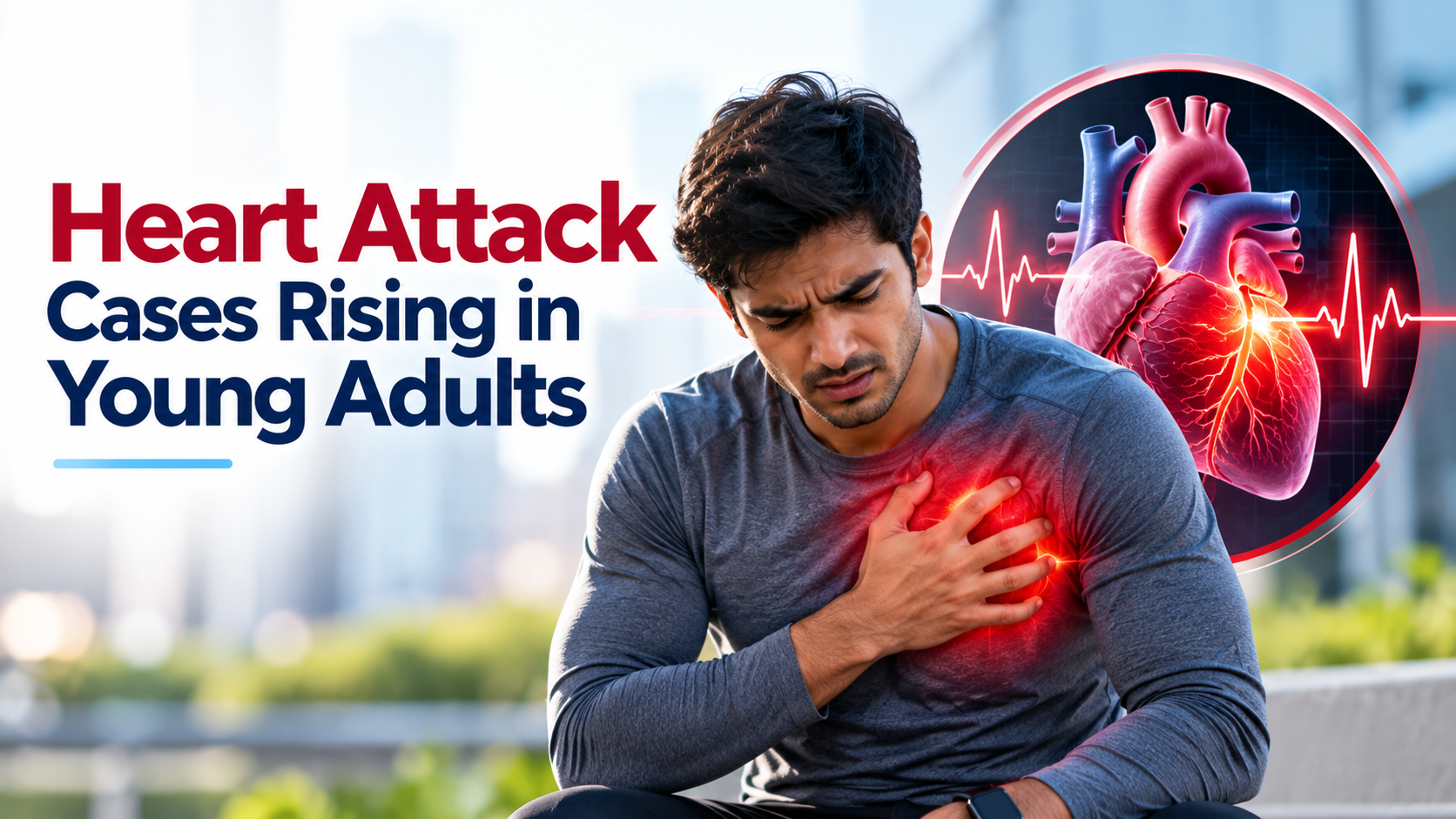
Heart Attack Cases Rising in Young Adults: Warning Signs You Should Never Ignore
27 September, 2026
A young age and an active routine can make a
heart attack seem unlikely. Yet younger adults can develop coronary artery disease, and chest discomfort may be dismissed as acidity, stress or muscle strain. Knowing your risk factors and recognising concerning symptoms can help prevent a dangerous delay in treatment.
Research presented by the American College of Cardiology in 2019 found a growing proportion of patients aged 40 or younger within a US group of heart attack patients under 50, treated between 2000 and 2016. This finding does not establish a current rate for India, but it supports taking heart health seriously well before middle age.
Why younger adults can be at risk
A heart attack occurs when the heart muscle is damaged because its blood supply is severely reduced or interrupted. A common cause is a clot forming over a disrupted plaque in a coronary artery. Risk can build up over years, even when a person feels healthy.
- Smoking and tobacco use damage blood vessels and increase cardiovascular risk. Occasional smoking should not be treated as harmless.
- High blood pressure, high cholesterol and diabetes may be present without obvious symptoms. When unrecognised or poorly controlled, they can contribute to early heart disease.
- Family history matters. A parent or sibling who developed heart disease at a young age is a reason to discuss earlier risk assessment. Inherited high cholesterol can affect people who are lean and physically active.
- Prolonged inactivity, excess weight and an unhealthy diet can worsen blood pressure, cholesterol and blood sugar. Regular exercise helps, but cannot remove every other risk factor. [12]
- Insufficient sleep and ongoing stress can affect heart health and make healthy routines harder to maintain. Addressing them belongs alongside treatment of established medical risks. [8]
Warning signs you should recognise
Heart attack symptoms can begin suddenly or develop gradually. Warning signs include:
- Pressure, tightness, heaviness or pain in the chest.
- Pain or discomfort spreading to the arm, shoulder, jaw, neck, back or upper abdomen.
- Unexpected breathlessness, cold sweating, nausea or vomiting.
- Sudden dizziness, faintness or marked unexplained weakness.
Do not wait for all these symptoms to appear together. Severe chest pain is not always present. Chest discomfort remains the most common symptom in both women and men, but women may also experience nausea, breathlessness or unusual tiredness. Being young should never be the reason for dismissing these symptoms.
What to do if a heart attack is suspected
Stop what you are doing and call emergency services for an ambulance. Do not drive yourself or continue exercising to see whether the discomfort passes. Follow the emergency dispatcher’s instructions and avoid delaying help while trying antacids or other home remedies. Prompt treatment can limit damage to the heart muscle.
Reduce risk before symptoms appear
Start by knowing your
blood pressure, cholesterol and
blood sugar. Discuss how often to check them with a doctor, particularly if you smoke, have diabetes or have a family history of early heart disease. An assessment should reflect your individual risk; it does not mean that every healthy young adult needs an angiogram or a treadmill test.
Build regular physical activity into your week and take breaks from long periods of sitting. Choose vegetables, fruit, pulses, whole grains and suitable protein sources more often, while limiting excess salt, sugary drinks and foods high in saturated fat. Avoid tobacco, aim for a healthy weight and take prescribed medicines consistently.
Frequently asked questions
Can a fit person have a heart attack?
Yes. Fitness is beneficial, but appearance and exercise habits cannot reveal every underlying risk, including inherited cholesterol problems or undiagnosed diabetes.
Should I wait until I am older to check my heart health?
No. Discuss your risk factors during routine medical care. The timing and type of tests should depend on your history and symptoms.
Plan a cardiac consultation
If you are seeking a
cardiology hospital in Kolkata for a preventive consultation or assessment of recurring symptoms, contact B. P. Poddar Hospital, New Alipore. Our Cardiology Department can help assess your risk and guide further care. For suspected heart attack symptoms, seek emergency treatment immediately.


 NABH Accredited Hospital