How to Prepare for an Endoscopy: What to Eat, Drink and Avoid Before the Test
28 September, 2026
Preparing for an
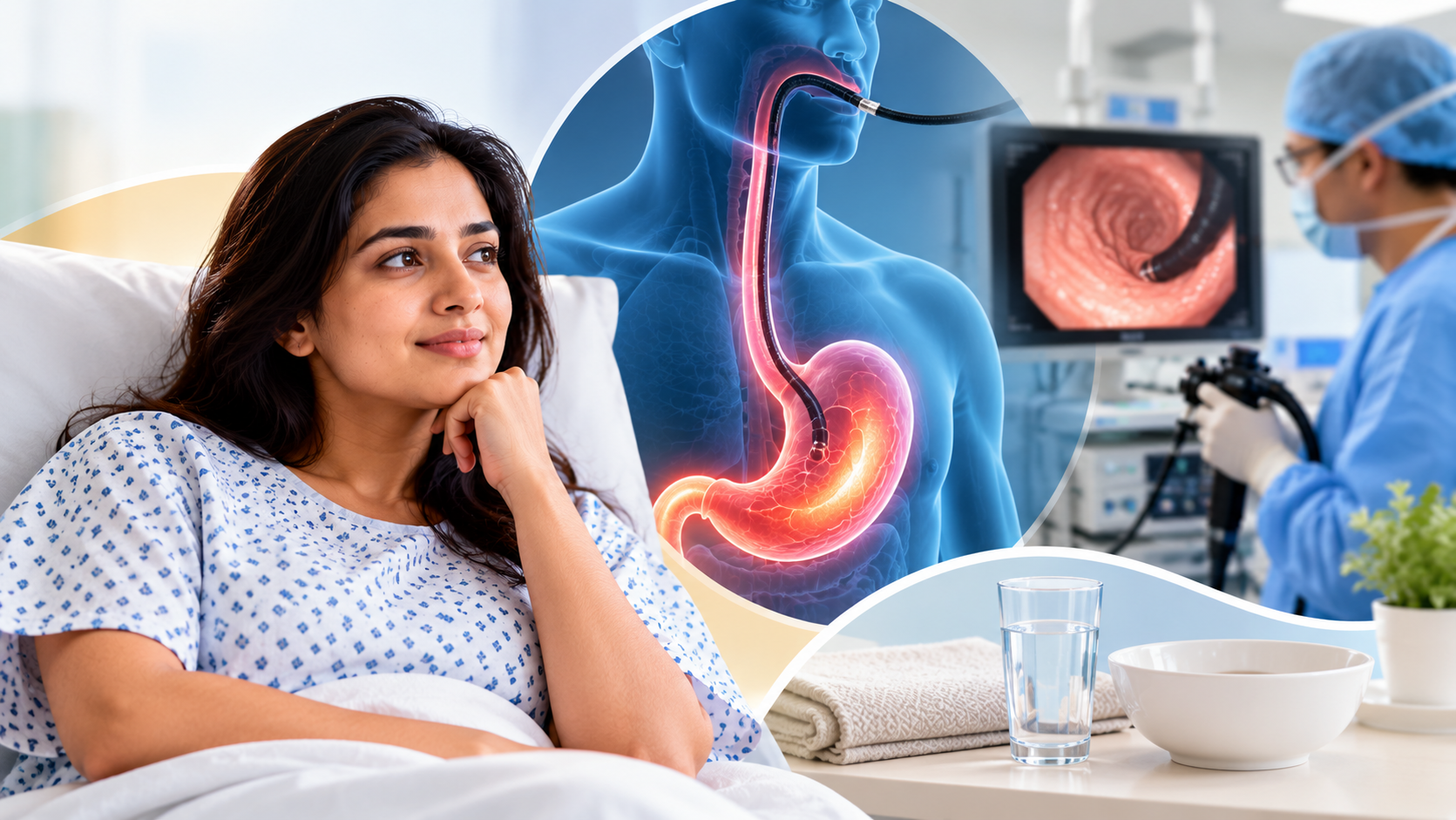
endoscopy involves more than skipping breakfast. Knowing when to stop eating and drinking, which medicines need review and whether you need someone to accompany you helps the procedure go ahead safely.
This guide covers upper gastrointestinal endoscopy, also called gastroscopy or OGD, in adults. It examines the food pipe, stomach and first part of the small intestine. Colonoscopy,
capsule endoscopy and other procedures have different preparation requirements.
Why an empty stomach matters
Food remaining in the stomach can obscure the lining and make the examination difficult. During sedation, stomach contents can also come back up and enter the lungs, a complication called aspiration. Following the fasting instructions helps reduce these risks.
Your endoscopy team’s written instructions take priority over general advice. Check whether the fasting deadline is calculated from your arrival time or the expected procedure time, and call the unit if anything is unclear.
What to eat and drink before the test
Many services ask patients to avoid solid food for at least six to eight hours before an upper endoscopy. Some allow small sips of water until two hours beforehand, while others require a longer period without any intake. Use the schedule given for your appointment.
| Food or drink |
Preparation guidance |
| Solid meals and snacks |
Finish eating before your stated food deadline. A light meal beforehand may be easier to plan than a heavy or fried meal, which can take longer to leave the stomach. |
| Water and clear drinks |
Drink only what your unit permits, and only until its stated deadline. Some protocols allow water or plain tea and coffee without milk; permission varies between units. |
| Milk and thick drinks |
Milk tea, coffee with milk, lassi, smoothies and juice with pulp are not clear fluids. Do not assume they are allowed during the period when water is permitted. |
The food and drink categories above are general guidance; your unit may give stricter instructions. Once your fluid deadline has passed, do not eat or drink unless the clinical team has specifically authorised medicine with a sip of water.
Medicines that need advance planning
Share a complete list of prescription medicines, over-the-counter products and supplements. Ask specifically about blood thinners and antiplatelet medicines, insulin, other diabetes medicines and acid-suppressing treatment. Some can be continued, while others require an individual plan. Do not stop prescribed treatment or change doses yourself.
Tell the team if you take semaglutide or similar medicines for
diabetes or weight management. These can delay stomach emptying. Preparation may need changing according to your dose, recent dose increases and symptoms such as nausea, vomiting or bloating. There is no single stopping rule that applies to everyone.
If you have diabetes, ask how to monitor your glucose while fasting and what to do if it falls too low. Also mention allergies, pregnancy, sleep apnoea and any previous problem with sedation.
What to avoid and arrange beforehand
- Avoid alcohol before the procedure and follow the unit’s instructions about smoking, chewing gum and sweets during fasting.
- If you eat or drink after the deadline, tell the team what you had and when. They may need to delay the examination for safety.
- If sedation is planned, arrange for a responsible adult to take you home and stay with you afterwards. Do not plan to drive, operate machinery or make important decisions for 24 hours after sedation.
Frequently asked questions
Can I drink water on the morning of the test?
Only within the window your endoscopy unit permits. A general “two-hour rule” should never replace the instructions for your own appointment.
Do I need laxatives before an upper endoscopy?
Routine upper endoscopy usually requires fasting rather than a bowel-cleansing laxative. If a colonoscopy is also planned, you will need separate bowel preparation.
When can I eat afterwards?
Wait until the team says it is safe. If throat spray was used, the numbness must wear off and swallowing must be safe before food or drink.
Endoscopy at B P Poddar Hospital
For endoscopy in Kolkata, contact the
Gastroenterology Department at B. P. Poddar Hospital, New Alipore. Confirm your fasting schedule, medicine plan and arrangements for sedation with the team before the appointment.


 NABH Accredited Hospital