Stroke in Young Adults and the Warning Signs You Should Never Ignore
29 October, 2026
World Stroke Day 2026
Expert insights from Dr. Kaushik Sen, Head, Neurology Department, B. P. Poddar Hospital & Medical Research Ltd., New Alipore, Kolkata.
A sudden weakness in an arm or a few minutes of slurred speech can be the first warning of a stroke, even in someone in their twenties or thirties. Dismissing these symptoms because a person seems too young can delay treatment when every minute matters.
Globally, the World Health Organization reports a 50% increase in the lifetime risk of stroke over the past 20 years, with around one in four adults expected to experience a stroke during their lifetime. [1]
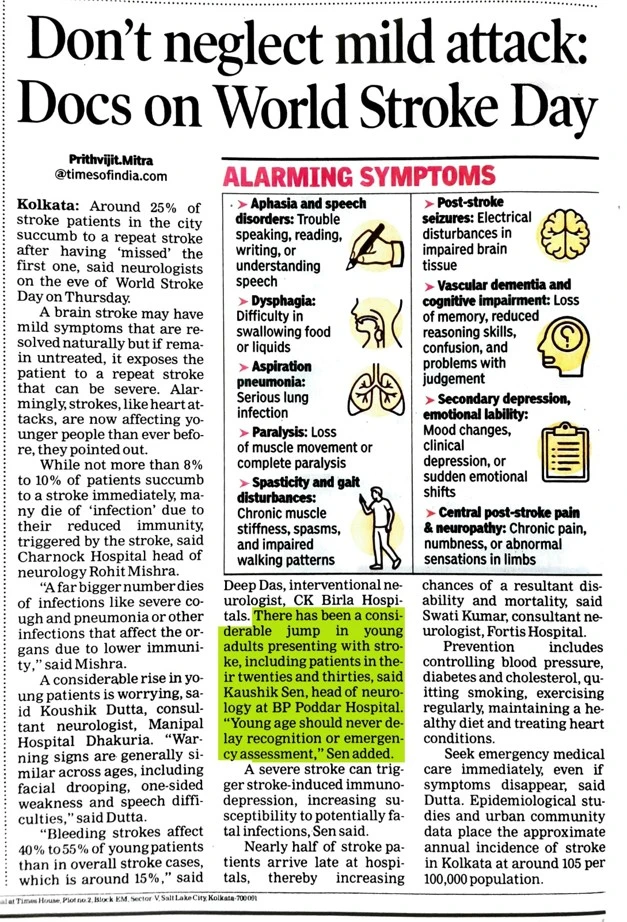
On World Stroke Day, observed on 29 October, Dr. Kaushik Sen draws attention to the growing number of young adults presenting with stroke. In his comments to The Times of India, he highlighted patients in their twenties and thirties and warned that severe stroke can also weaken immunity, increasing vulnerability to serious infections.
“Young age should never delay recognition or emergency assessment.”
Dr. Kaushik Sen, as quoted in The Times of India
Why younger adults are at risk of stroke
A stroke occurs when a blood vessel supplying the brain becomes blocked or ruptures. The resulting brain injury can affect movement, speech, vision and other functions. The two main types are ischaemic stroke, caused by a blockage, and haemorrhagic stroke, caused by bleeding.
High blood pressure, diabetes, raised cholesterol, smoking and obesity can increase stroke risk well before old age. Physical inactivity, unhealthy dietary habits and excessive alcohol consumption can add to that risk. High blood pressure is especially easy to overlook because it often causes no noticeable symptoms.
Some younger patients also have underlying heart conditions or blood-vessel disorders that require investigation. For example, a tear in the wall of an artery supplying the brain, called an arterial dissection, is a recognised cause of stroke in younger adults. Identifying the cause helps guide treatment and prevention.
Early signs of stroke to recognise
Stroke symptoms usually begin suddenly. The BE FAST reminder can help families recognise warning signs:
- B — Balance: Sudden loss of balance or coordination.
- E — Eyes: Sudden blurred vision, double vision or loss of sight.
- F — Face: Drooping or numbness on one side of the face.
- A — Arms: Sudden weakness or numbness in an arm, often on one side.
- S — Speech: Slurred speech or difficulty speaking or understanding.
- T — Time: Call an ambulance immediately if any of these signs appear.
A sudden, unusually severe headache can also be a warning sign. Do not wait for every symptom to appear before seeking help.
Why symptoms that disappear still need emergency care
Weakness or speech difficulty that resolves within minutes may be a transient ischaemic attack, or TIA. Temporary improvement does not make it safe to ignore: a TIA can warn of a future stroke and needs urgent assessment.
Note when symptoms started, or when the person was last known to be well, and call an ambulance. While waiting, do not give food, drinks or medicines, including aspirin, unless emergency clinicians instruct you to. Swallowing may be unsafe, and aspirin can worsen a bleeding stroke.
How a severe stroke can weaken immunity
Dr. Sen also highlighted stroke-induced immunodepression. After a severe stroke, changes in the body’s immune response can reduce its ability to fight infection. This can leave some patients more susceptible to complications such as pneumonia.
A separate problem can compound this risk. Stroke may impair swallowing, allowing food, fluid or saliva to enter the airway. This is called aspiration, and it can contribute to pneumonia. Research has identified impaired swallowing and stroke-induced immunodepression as independent risk factors for pneumonia after stroke. [9, 10]
Care therefore extends beyond the initial brain injury. Swallowing assessment, appropriate nutrition and monitoring for infection are important during recovery. Families should follow the clinical team’s feeding advice and report new swallowing difficulties promptly.
Why early stroke treatment matters
Urgent brain imaging helps distinguish a blocked artery from bleeding and guides treatment. Eligible patients with an ischaemic stroke may receive clot-dissolving medication, usually within 4.5 hours of symptom onset. Selected patients with a large-vessel blockage may benefit from mechanical thrombectomy, a procedure to remove the clot, up to 24 hours after onset. Eligibility depends on clinical assessment and imaging.
These treatment windows are not a reason to wait. Seek emergency assessment immediately, including if symptoms are discovered on waking or the time of onset is uncertain.
How to reduce your risk of stroke
Prevention starts with knowing and managing your risk factors:
- Check blood pressure, blood glucose and cholesterol as advised by your doctor.
- Take prescribed medicines consistently and attend follow-up appointments.
- Stop smoking and avoid exposure to second-hand smoke.
- Stay physically active, maintain a healthy weight and limit excess salt and alcohol.
- Seek treatment for heart conditions, including an irregular heartbeat such as atrial fibrillation.
After a stroke or TIA, an individual prevention plan is particularly important because the risk of another stroke is higher.
Stroke assessment and care in New Alipore Kolkata
- P. Poddar Hospital & Medical Research Ltd., New Alipore, Kolkata, provides neurology services alongside 24×7 Emergency and Critical Care. For stroke risk assessment or follow-up, consult the hospital’s Neurology team. If sudden stroke symptoms occur, seek emergency care immediately instead of waiting for an OPD appointment.
Frequently asked questions
Can someone in their twenties or thirties have a stroke
Yes. Stroke can occur at any age. Sudden facial drooping, weakness, speech difficulty or changes in balance or vision require emergency assessment regardless of age.
Can a stroke affect immunity
Yes. Some patients develop stroke-induced immunodepression, which weakens immune defences and can increase susceptibility to infections. Swallowing problems can further increase pneumonia risk. [9, 10]
Should I seek help if stroke symptoms go away
Yes. Symptoms that disappear may indicate a TIA. Seek emergency medical assessment even if you feel completely well again.
Featured Article in the Print Media


 NABH Accredited Hospital