

Reviewed by:
Dr. Hoorbano Khan (Anwar)
Consultant Obstetrician & Gynaecologist
Understanding Cervical Cancer, HPV Vaccination, Early Detection and the Global Mission to Eliminate a Preventable Disease
Imagine a future where cervical cancer no longer poses a major threat to women’s lives. Unlike many other cancers, cervical cancer is largely preventable through vaccination, regular screening and timely medical intervention. Yet, thousands of women continue to lose their lives to this disease every year, often because it remains undetected until an advanced stage.
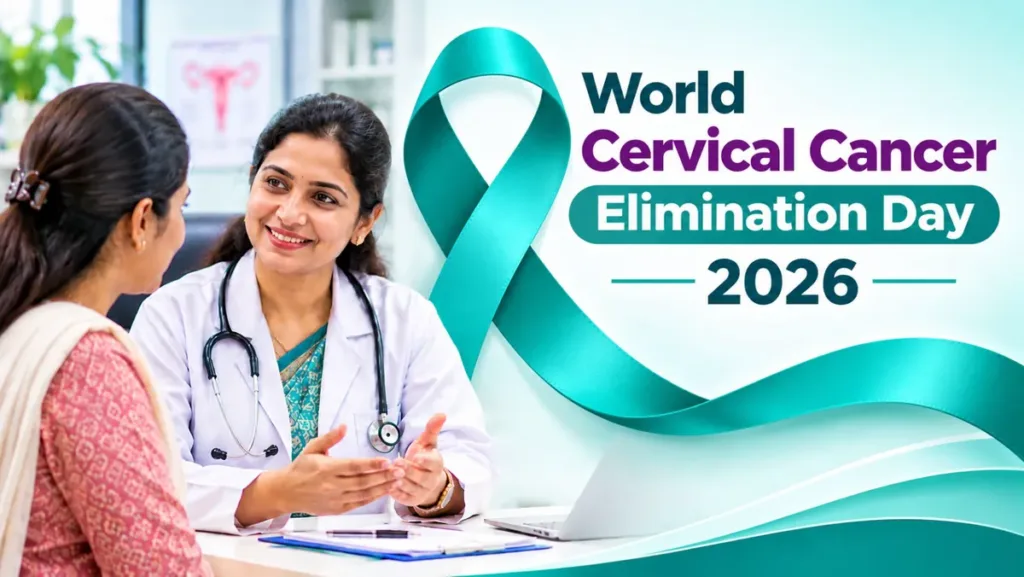
Observed annually on 17 November, World Cervical Cancer Elimination Day represents an international commitment to change this reality.
The World Health Organization (WHO) has announced “Together We Can Eliminate Cervical Cancer” as the theme for 2026, reinforcing the importance of collective action through awareness, vaccination, screening and access to appropriate treatment.
According to WHO estimates published in November 2026, approximately 604,000 women worldwide were diagnosed with cervical cancer in 2024, while around 280,000 lost their lives to the disease. These figures highlight the continuing global burden of a cancer that can often be prevented or successfully treated when detected early.
Understanding Cervical Cancer
Cervical cancer develops in the cervix, the lower, narrow portion of the uterus that connects to the vagina.
The disease occurs when abnormal cells in the cervix begin multiplying uncontrollably, eventually forming a malignant tumour. These cancerous cells may invade surrounding tissues and, in advanced stages, spread to other parts of the body.
One distinguishing characteristic of cervical cancer is that it generally develops gradually. Precancerous cellular changes may occur several years before invasive cancer develops.
This prolonged precancerous phase creates an important opportunity for screening, early intervention and prevention.
What Causes Cervical Cancer?
The primary cause of cervical cancer is persistent infection with certain high-risk types of Human Papillomavirus (HPV).
HPV is a common virus transmitted primarily through intimate skin-to-skin sexual contact. Most sexually active individuals encounter HPV at some point during their lives.
In the majority of cases, the body’s immune system clears the infection naturally without causing significant health problems.
However, when high-risk HPV infections persist, they can cause abnormal changes in cervical cells, which may eventually progress to cancer.
HPV types 16 and 18 are particularly significant because they account for a substantial proportion of cervical cancer cases worldwide.
Importantly, testing positive for HPV does not mean a woman has cervical cancer. It indicates an infection that may require monitoring or further investigation, depending on the type of HPV and screening findings.
Risk Factors: Who Is More Vulnerable?
Although persistent high-risk HPV infection is the principal cause, several factors can increase the likelihood of developing cervical cancer.
Persistent HPV Infection: Long-standing infection with high-risk HPV types is the most significant risk factor.
Weakened Immunity: Women with compromised immune systems, including those living with HIV, have an increased risk of persistent HPV infection and cervical cancer.
Smoking: Tobacco exposure can impair local immune responses and contribute to cellular changes associated with cervical cancer.
Early Sexual Activity and Multiple Sexual Partners: These factors may increase the probability of HPV exposure, although infection can occur even with a single partner.
Other Sexually Transmitted Infections: Certain coexisting infections may contribute to persistent HPV infection and disease progression.
Inadequate Cervical Screening: Women who do not undergo recommended screening may miss the opportunity to identify and treat precancerous changes.
It is equally important to understand that cervical cancer can develop in women without obvious risk factors. Consequently, preventive healthcare should not be limited to individuals who consider themselves vulnerable.
Recognising the Warning Signs of Cervical Cancer
One of the greatest challenges in cervical cancer prevention is that early-stage disease and precancerous changes frequently produce no noticeable symptoms.
As the disease progresses, certain warning signs may become apparent.
These include abnormal vaginal bleeding between menstrual periods, bleeding following sexual intercourse, unusually heavy menstrual bleeding or bleeding after menopause.
Other possible symptoms include persistent watery or foul-smelling vaginal discharge, pelvic discomfort, pain during intercourse, unexplained fatigue and persistent lower back pain.
Advanced disease may also produce unexplained weight loss, urinary difficulties or swelling of the legs.
While these symptoms can occur due to several non-cancerous gynaecological conditions, they should never be ignored.
Any unexplained postmenopausal bleeding or persistent abnormal vaginal bleeding warrants prompt gynaecological evaluation.
HPV Vaccination: Preventing Cervical Cancer Before It Begins
HPV vaccination is one of the most effective strategies for preventing cervical cancer.
The vaccine provides protection against high-risk HPV types responsible for most cervical cancers. Vaccination is particularly beneficial when administered before exposure to the virus.
WHO recommends HPV vaccination primarily for girls between 9 and 14 years of age, when the immune response is strong and vaccination can provide protection before potential HPV exposure.
Depending on the applicable national programme, vaccine formulation, age and immune status, the vaccination schedule may involve one or more doses.
India’s HPV Vaccination Initiative
India has taken a significant step towards cervical cancer prevention by launching a nationwide HPV vaccination programme on 28 February 2026.
The programme provides free HPV vaccination to eligible 14-year-old girls through designated government healthcare facilities.
The initiative represents an important advancement in preventive women’s healthcare, particularly by improving access to vaccination among communities that might otherwise face financial or geographical barriers.
Parents are encouraged to discuss HPV vaccination with their child’s paediatrician or qualified healthcare professional.
Adult women who have not previously received the vaccine may also consult their doctors regarding individual eligibility and potential benefits.
However, an essential distinction must be understood: HPV vaccination prevents new infections but does not treat existing HPV infections or cervical cancer.
Furthermore, vaccinated women must continue undergoing cervical screening according to recommended guidelines.
Cervical Cancer Screening: Detecting Changes Before Cancer Develops
While vaccination protects against future HPV infections, cervical screening identifies existing infections or abnormal cellular changes that could eventually develop into cancer.
Screening is particularly important because precancerous lesions usually do not produce symptoms.
Several screening methods are available.
1. HPV DNA Test
An HPV DNA test identifies the presence of high-risk HPV types associated with cervical cancer.
It is a highly effective screening method because it detects the primary viral risk factor before significant cellular abnormalities develop.
Where appropriate and available, validated self-collected samples may also be used for HPV testing.
2. Pap Smear
A Pap smear, or Papanicolaou test, involves collecting a small sample of cells from the cervix.
The sample is examined for abnormal cellular changes that may indicate precancerous lesions or malignancy.
When Should Women Begin Screening?
WHO recommends cervical screening with a high-performance test from around 30 years of age, generally at intervals of 5–10 years, depending on the screening programme.
Women living with HIV require earlier and more frequent screening.
Individual screening recommendations may also vary according to medical history, previous screening results, risk factors and applicable national guidelines.
Importantly, women should not wait for symptoms to appear before undergoing screening.
A positive screening result does not automatically indicate cancer. It helps identify women who may require additional evaluation.
How Is Cervical Cancer Diagnosed?
When screening reveals abnormalities or a patient presents with suspicious symptoms, further investigations may be necessary.
Colposcopy allows the gynaecologist to examine the cervix under magnification and identify suspicious areas.
A cervical biopsy involves collecting a small tissue sample for microscopic examination and is essential for confirming the diagnosis when cancer is suspected.
If malignancy is confirmed, additional investigations such as MRI, CT or PET-CT may be recommended to determine the extent of the disease and guide treatment planning.
The choice of investigations depends on clinical findings and the suspected stage of cancer.
Early and accurate diagnosis plays a critical role in selecting an appropriate treatment strategy.
Treatment of Cervical Cancer: From Precancerous Changes to Advanced Disease
Treatment depends on whether the abnormality is precancerous or invasive, the stage of cancer, the patient’s general health and other individual considerations.
Treatment of Precancerous Lesions
When abnormal cervical cells are identified before they become cancerous, relatively limited procedures may prevent disease progression.
These may include thermal ablation, cryotherapy, Loop Electrosurgical Excision Procedure (LEEP) or other excisional treatments.
The objective is to remove or destroy abnormal tissue before invasive cancer develops.
Treatment of Early-Stage Cervical Cancer
When cervical cancer is detected at an early stage, surgical intervention may be appropriate.
Depending on the extent of the disease, procedures may range from fertility-preserving surgery in selected patients to hysterectomy with appropriate assessment of surrounding tissues and lymph nodes.
Radiotherapy may also be recommended in certain situations.
Treatment of Locally Advanced Cervical Cancer
For locally advanced disease, treatment frequently involves a combination of external beam radiotherapy, brachytherapy and chemotherapy.
Brachytherapy delivers radiation directly to or near the tumour, allowing concentrated treatment while limiting exposure to surrounding healthy tissues.
Treatment of Advanced or Recurrent Cervical Cancer
For selected patients with recurrent, persistent or metastatic disease, systemic treatments may include chemotherapy, immunotherapy or targeted therapy.
The selection of treatment depends on disease characteristics, previous treatments, relevant biomarkers and the patient’s overall condition.
A multidisciplinary approach involving gynaecological oncologists, radiation oncologists, medical oncologists, radiologists and other specialists is important for comprehensive cancer management.
Supportive care, nutritional guidance, psychological counselling and symptom management also remain integral components of treatment.
The Global 90–70–90 Strategy: A Roadmap Towards Elimination
The WHO has established an ambitious global strategy to eliminate cervical cancer as a public health problem.
Under this strategy, countries are working towards achieving three major targets by 2030:
- 90% Vaccination: At least 90% of girls should be fully vaccinated against HPV by the age of 15.
- 70% Screening: At least 70% of women should undergo screening using a high-performance test by 35 years of age and again by 45 years.
- 90% Treatment: At least 90% of women diagnosed with cervical precancer or invasive cervical cancer should receive appropriate treatment.
The ultimate objective is to reduce cervical cancer incidence to four or fewer new cases annually per 100,000 women.
Importantly, achieving the 2030 targets would place countries on the pathway towards elimination over the following decades. It does not mean cervical cancer will disappear completely by 2030.
Why Awareness and Accessibility Matter
Despite advances in vaccination, screening and treatment, considerable gaps remain in cervical cancer prevention.
According to new WHO estimates released on 17 November 2026, three out of every five women aged 30–49 years worldwide have never undergone cervical cancer screening.
This highlights a major challenge: effective preventive technologies already exist, but access to them remains unequal.
Financial limitations, insufficient awareness, cultural hesitation, fear of diagnosis and inadequate access to screening facilities can prevent women from seeking timely care.
In many households, women prioritise the healthcare needs of their children, spouses and elderly family members while postponing their own routine medical examinations.
Consequently, potentially preventable diseases may remain undetected until symptoms become severe.
Addressing these barriers requires accessible healthcare services, community education, supportive family environments and greater emphasis on preventive screening.
Building a Future Without Cervical Cancer
World Cervical Cancer Elimination Day is more than an annual awareness campaign. It represents an opportunity to transform how society approaches women’s preventive healthcare.
Eliminating cervical cancer requires action across the entire continuum of care, beginning with HPV vaccination during adolescence and continuing through regular screening, early diagnosis and timely treatment.
At B. P. Poddar Hospital & Medical Research Ltd.https://www.bppoddarhospital.com/cancer-hospital/, New Alipore, Kolkata, we recognise the importance of preventive healthcare, early disease detection and multidisciplinary cancer management in improving women’s health outcomes.
Women should feel empowered to discuss HPV vaccination, undergo recommended cervical screening and seek prompt medical attention for unexplained gynaecological symptoms.
Families, too, have an important role in encouraging women to prioritise their health without hesitation or stigma.
On World Cervical Cancer Elimination Day 2026, the message is clear: cervical cancer prevention is possible, early detection saves lives, and eliminating this disease as a public health problem is an achievable global ambition.