
Reviewed by: Dr. Sreejata Raychaudhuri, Consultant Medical Oncologist
MBBS, MD (Internal Medicine, USA), DM (Medical Oncology and Hematology, USA)
A persistent cough is often dismissed as a lingering infection. Breathlessness may be attributed to age, pollution or an existing respiratory condition. While these symptoms can have many causes, they can sometimes be signs of lung cancer.
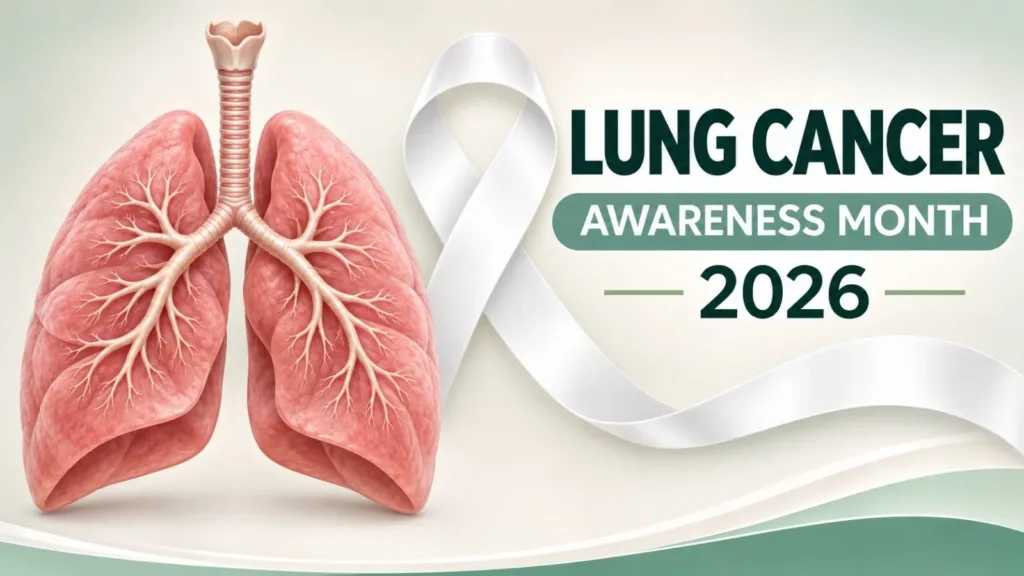
Observed every November, Lung Cancer Awareness Month is an opportunity to understand the risks, recognise the warning signs and encourage timely medical attention. It is also a reminder that while smoking is the leading risk factor, lung cancer can affect people who have never smoked.
Lung cancer in India
Lung cancer remains a major health concern worldwide. According to the International Agency for Research on Cancer (IARC), an estimated 2.6 million people were diagnosed with lung cancer globally in 2024.
In India, GLOBOCAN estimated 1,12,659 new cases and 98,687 deaths from lung cancer in 2024. It was the country’s third most commonly diagnosed cancer and the leading cause of cancer-related deaths.
These figures highlight the importance of prevention, symptom awareness and timely diagnosis.
What is lung cancer?
Lung cancer develops when abnormal cells in the lungs grow uncontrollably and form a tumour. As the disease progresses, cancer cells may spread to nearby lymph nodes or other parts of the body.
The two main types are:
- Non-small cell lung cancer (NSCLC): The more common type, which includes several subtypes.
- Small cell lung cancer (SCLC): A less common type that generally grows and spreads more quickly.
Identifying the type and extent of the cancer is essential for planning treatment.
Lung cancer is not limited to smokers
Smoking remains the most important risk factor for lung cancer. Tobacco smoke contains substances that can damage lung cells, and the risk generally increases with the amount and duration of smoking.
However, lung cancer can also occur in people who have never smoked. Several environmental, occupational and personal factors may contribute to the risk.
Smoking and second-hand smoke
Smoking cigarettes or bidis exposes the lungs to cancer-causing substances. People who regularly breathe smoke from someone else’s tobacco use are also exposed to harmful chemicals.
Creating smoke-free homes and workplaces protects both smokers and the people around them.
Air pollution and indoor smoke
Long-term exposure to outdoor air pollution can increase lung cancer risk. Indoor air pollution is also a concern, particularly where wood, coal or other solid fuels are used for cooking in poorly ventilated spaces.
Occupational exposure
People working with or around substances such as asbestos, silica dust and diesel exhaust may face an increased risk, especially with prolonged exposure. Appropriate workplace controls and protective measures can help reduce exposure.
Family and medical history
A family history of lung cancer and certain chronic lung diseases may also be associated with an increased risk. Having a risk factor, however, does not mean that a person will necessarily develop lung cancer. The disease can also occur when no clear cause is identified.
Warning signs of lung cancer
Lung cancer may not cause noticeable symptoms in its early stages. When symptoms do appear, they can resemble those of other respiratory conditions.
Possible warning signs include:
- A cough that does not go away or changes over time
- Coughing up blood or blood-stained mucus
- Breathlessness or wheezing
- Persistent chest pain or discomfort
- Repeated chest infections
- Unexplained weight loss or loss of appetite
- Persistent fatigue
- A change in voice or hoarseness
These symptoms do not automatically mean a person has lung cancer. Respiratory infections, tuberculosis and other conditions can cause similar symptoms. Persistent or unexplained symptoms should nevertheless be assessed by a doctor. Coughing up blood requires prompt medical attention.
Why early detection matters
Lung cancer found at an earlier stage may offer more treatment possibilities. Some early-stage cancers can be treated with the aim of cure, depending on the type of cancer and the patient’s overall health.
Early detection involves two different approaches: screening people at high risk who have no symptoms, and promptly investigating symptoms when they occur.
Who may be considered for screening?
For some people at high risk, particularly those with a substantial history of smoking, a doctor may consider screening with a low-dose CT scan. This scan can detect abnormalities in the lungs before symptoms appear.
Screening is not suitable for everyone. A doctor considers factors such as age, smoking history and overall health, alongside the potential benefits and risks. A scan may sometimes identify an abnormality that is not cancer but still requires further tests or follow-up.
Anyone experiencing symptoms should seek medical evaluation, regardless of smoking history or a previous screening result.
How is lung cancer diagnosed?
If lung cancer is suspected, a doctor will consider the person’s symptoms, medical history and examination findings before recommending investigations. These may include:
- Imaging: A chest X-ray or CT scan may help identify an abnormality in the lungs.
- Bronchoscopy: A thin, flexible tube with a camera is passed into the airways to examine them and, when appropriate, collect samples.
- Biopsy: A small sample of tissue is examined under a microscope to determine whether cancer is present and identify its type.
- PET-CT and other imaging: These may be advised in selected cases to assess the extent of the disease and help plan treatment.
Not every abnormality seen on a scan is cancer. The doctor determines which investigations are appropriate for each patient.
Once cancer is diagnosed, the process of assessing its size and whether it has spread is called staging. In selected cases, molecular or biomarker tests may also help guide treatment decisions.
Treatment options for lung cancer
Lung cancer treatment is individualised. The recommended approach depends on the type and stage of cancer, the patient’s overall health and, where relevant, the molecular characteristics of the tumour.
Surgery
Surgery may be considered when the cancer can be removed and the patient is fit for the procedure. Depending on the situation, the surgeon may remove part of a lung or a larger affected section.
Radiation therapy
Radiation therapy uses high-energy radiation to treat cancer cells. It may be used as a primary treatment in some patients, alongside other treatments, or to relieve symptoms.
Chemotherapy
Chemotherapy uses medicines to destroy cancer cells or slow their growth. It may be given before or after surgery, with radiation therapy, or as part of treatment for more advanced disease.
Targeted therapy
Some lung cancers have specific molecular changes that allow them to be treated with targeted medicines. Testing the tumour for relevant biomarkers can help doctors identify patients who may benefit.
Immunotherapy
Immunotherapy helps the body’s immune system recognise and fight cancer. It may be used alone or alongside other treatments in appropriate patients.
Supportive care and follow-up
Cancer care also includes managing symptoms, treatment-related side effects and emotional concerns. Pain management, nutritional support and supportive or palliative care can help improve quality of life at different stages of the disease.
Regular follow-up allows the care team to assess treatment response, address concerns and recommend further investigations when needed.
Steps to reduce the risk
Not every case of lung cancer can be prevented, but the following steps can help lower risk:
- Avoid smoking or seek help to quit. Quitting is beneficial at any age, and the risk of lung cancer decreases over time.
- Keep homes and workplaces smoke-free to reduce exposure to second-hand smoke.
- Reduce indoor smoke by using cleaner cooking fuels where possible and ensuring adequate ventilation.
- Follow workplace safety measures to limit exposure to harmful dust, fumes and chemicals.
- Discuss your individual risk with a doctor, particularly if you have a substantial smoking history or persistent respiratory symptoms.
Lung cancer care at B. P. Poddar Hospital
At B. P. Poddar Hospital & Medical Research Ltd., the Cancer Unit supports patients through diagnosis, treatment and follow-up. Diagnostic services include imaging such as CT and PET-CT, as well as bronchoscopy and biopsy when clinically indicated.
This Lung Cancer Awareness Month, remember that awareness is relevant to everyone. Recognising persistent symptoms and seeking timely medical advice can be an important first step towards care.