

Reviewed by: Dr. Subrata Kumar Sahu, Consultant Surgical Oncologist
MBBS, MS (General Surgery), DNB (Surgical Oncology), FIAGES
Persistent abdominal discomfort, unexplained weight loss, reduced appetite or sudden changes in blood glucose levels are symptoms many people tend to overlook. Often attributed to digestive problems, stress, ageing or lifestyle changes, these seemingly unrelated complaints may sometimes indicate a much more serious underlying condition.
Pancreatic cancer is among the most challenging cancers to detect early, primarily because its initial symptoms are often vague or entirely absent. By the time noticeable symptoms develop, the disease may already have progressed considerably.
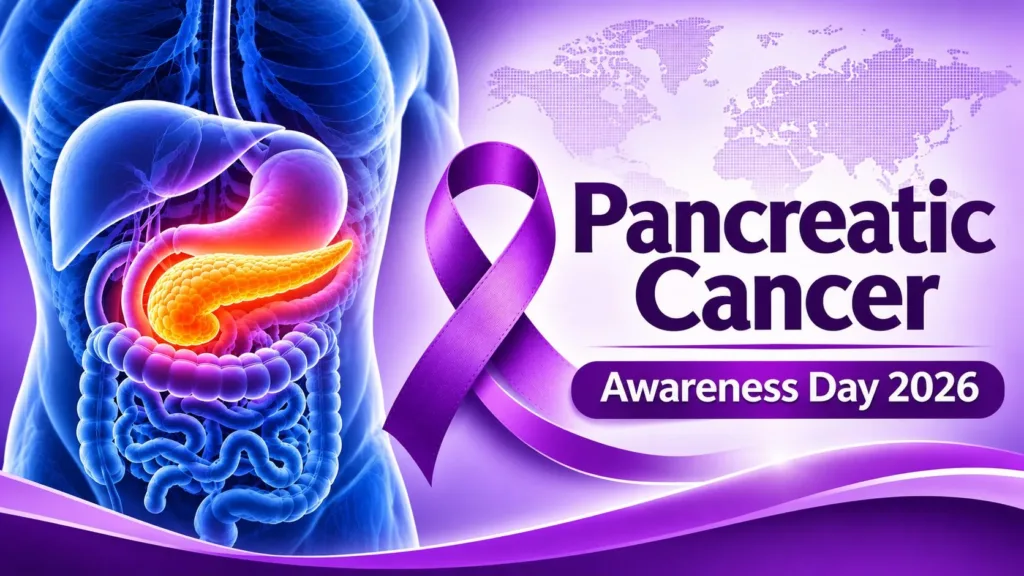
World Pancreatic Cancer Awareness Day 2026, observed on 19th November, highlights the importance of recognising early warning signs, understanding risk factors and encouraging timely medical evaluation.
The central message is clear: recognising subtle changes in the body and seeking medical attention without unnecessary delays can make a meaningful difference.
Understanding Pancreatic Cancer: What Makes It Different?
The pancreas is an elongated organ located deep within the abdomen, behind the stomach. It performs two essential functions.
- Digestive Function: The pancreas produces enzymes that help break down carbohydrates, proteins and fats, allowing the body to absorb nutrients efficiently.
- Hormonal Function: It produces hormones, particularly insulin and glucagon, which regulate blood glucose levels.
Pancreatic cancer develops when abnormal cells within the pancreas begin multiplying uncontrollably, eventually forming a malignant tumour.
The most common form is pancreatic ductal adenocarcinoma (PDAC), which accounts for approximately 90% of pancreatic cancers. It develops from cells associated with the pancreatic ducts.
A less common category, pancreatic neuroendocrine tumours, arises from hormone-producing cells and often differs in its biological behaviour, prognosis and treatment.
One of the greatest challenges in managing pancreatic cancer is its anatomical location. Situated deep within the abdomen, the pancreas is difficult to examine through routine physical assessment. Consequently, small tumours may remain undetected until they begin affecting nearby structures or spreading to other organs.
The Growing Burden of Pancreatic Cancer
Pancreatic cancer is a significant global health concern because of its comparatively high mortality rate.
According to the latest GLOBOCAN 2024 estimates, approximately 5.31 lakh new pancreatic cancer cases and 4.91 lakh deaths occurred worldwide. Despite ranking as the 11th most commonly diagnosed cancer globally, pancreatic cancer was the sixth leading cause of cancer-related deaths.
India is also experiencing a substantial burden.
A study published in JAMA Network Open in 2025, analysing cancer registry data, estimated approximately 18,923 pancreatic cancer-related deaths in India during 2024.
These figures highlight a critical concern: pancreatic cancer frequently remains undiagnosed until advanced stages, when treatment options become more limited.
Unlike certain other cancers, there is currently no recommended routine screening programme for pancreatic cancer among individuals at average risk.
This makes awareness of symptoms and appropriate evaluation of high-risk individuals particularly important.
Why Is Pancreatic Cancer Often Diagnosed Late?
Pancreatic cancer is frequently described as a silent disease because it may develop without producing obvious symptoms during its early stages.
Several factors contribute to delayed diagnosis.
- Absence of Distinct Early Symptoms: Initial symptoms such as abdominal discomfort, indigestion or fatigue can resemble common gastrointestinal conditions.
- Deep Anatomical Location: The pancreas cannot be easily examined through routine physical examination.
- Rapid Disease Progression: Certain pancreatic cancers can grow and spread relatively quickly, reducing the opportunity for surgical treatment.
- Lack of Routine Screening: Unlike breast, cervical or colorectal cancer, pancreatic cancer does not have an established screening programme for the general population.
- Delayed Medical Consultation: Patients may repeatedly manage symptoms with over-the-counter medications without investigating the underlying cause.
Consequently, a considerable proportion of patients are diagnosed only after the tumour has involved surrounding blood vessels or spread to distant organs.
Early Warning Signs of Pancreatic Cancer You Should Never Ignore
Although pancreatic cancer may not produce symptoms initially, certain warning signs deserve attention, particularly when they persist or occur together.
1. Persistent Abdominal or Back Pain
Discomfort in the upper abdomen, sometimes extending towards the back, is a recognised symptom.
The pain may initially be mild, intermittent or mistaken for acidity, gastritis or musculoskeletal problems. In some patients, it becomes more pronounced after eating or while lying down.
Persistent, unexplained abdominal or back pain warrants medical evaluation.
2. Unexplained Weight Loss
Sudden weight loss without dietary changes or increased physical activity can be an important warning sign.
Pancreatic cancer may interfere with digestion and nutrient absorption, while the disease itself can contribute to metabolic changes and reduced appetite.
3. Yellowing of the Skin and Eyes
Jaundice is an important clinical sign, particularly when a tumour develops in the head of the pancreas.
As the tumour enlarges, it may obstruct the common bile duct, preventing the normal drainage of bile.
This can result in yellowing of the skin or eyes, dark urine, pale stools and itching.
New-onset jaundice requires prompt medical assessment, even when it is not accompanied by pain.
4. Loss of Appetite and Digestive Problems
Patients may experience persistent nausea, abdominal bloating, early fullness after meals or reduced appetite.
Disruption of pancreatic enzyme production can also cause improper fat digestion, resulting in greasy, pale or foul-smelling stools.
5. Sudden-Onset Diabetes or Unexplained Blood Sugar Changes
An important and frequently overlooked association exists between pancreatic cancer and diabetes.
The pancreas plays a central role in insulin production. A developing pancreatic tumour may interfere with glucose regulation.
Consequently, new-onset diabetes in an individual above 50 years of age, particularly when accompanied by unexplained weight loss or abdominal discomfort, may sometimes warrant further investigation.
Similarly, unexpected deterioration in blood glucose control among individuals with previously stable diabetes should not automatically be attributed to dietary non-compliance.
However, it is important to understand that most people developing diabetes do not have pancreatic cancer.
6. Persistent Fatigue and Weakness
Unexplained exhaustion, reduced physical stamina and general weakness may accompany the disease.
While these symptoms have numerous possible causes, their persistence alongside other warning signs warrants evaluation.
What Are the Major Risk Factors?
The exact cause of pancreatic cancer is not always identifiable. However, several factors have been associated with an increased risk.
- Tobacco Consumption: Cigarette smoking and other forms of tobacco exposure are important preventable risk factors.
- Advancing Age: Pancreatic cancer occurs more frequently in older adults, particularly those above 60 years of age.
- Obesity: Excess body weight and associated metabolic abnormalities may increase susceptibility.
- Diabetes: Long-standing type 2 diabetes is associated with an increased risk, although new-onset diabetes can sometimes be a consequence of pancreatic cancer itself.
- Chronic Pancreatitis: Long-term inflammation of the pancreas increases the likelihood of malignant changes.
- Family History: Individuals with close relatives diagnosed with pancreatic cancer may have an elevated risk.
- Inherited Genetic Mutations: Certain hereditary conditions involving genes such as BRCA1, BRCA2, PALB2 and ATM can increase susceptibility.
Although some of these factors cannot be modified, recognising them helps identify individuals who may benefit from specialised risk assessment.
How Is Pancreatic Cancer Diagnosed?
Diagnosing pancreatic cancer requires a combination of clinical evaluation, laboratory investigations and advanced imaging techniques.
- Contrast-Enhanced CT Scan: A dedicated pancreatic-protocol CT scan helps identify tumours, assess their relationship with surrounding blood vessels and determine whether the disease has spread.
- MRI and MRCP: Magnetic Resonance Imaging and Magnetic Resonance Cholangiopancreatography provide detailed images of the pancreas, pancreatic ducts and biliary system.
- Endoscopic Ultrasound (EUS): This technique allows specialists to examine the pancreas from within the digestive tract and obtain tissue samples from suspicious lesions when required.
- PET-CT Imaging: In selected cases, PET-CT may help identify disease spread and provide additional information for staging and treatment planning. It is not routinely required for every patient.
- Tumour Marker Assessment: Blood tests measuring CA 19-9 may assist in evaluating the disease and monitoring treatment response.
However, CA 19-9 alone cannot reliably diagnose pancreatic cancer and is not recommended as a general screening test.
- Biopsy and Histopathology: Examination of tissue samples helps confirm the diagnosis and determine the type of malignancy.
Accurate diagnosis and staging are essential for selecting the most appropriate treatment strategy.
Understanding the Stages of Pancreatic Cancer
The extent of the disease plays a crucial role in determining treatment options.
- Localised Disease: The tumour remains confined to the pancreas and may be suitable for surgical removal.
- Borderline Resectable Disease: The tumour involves or lies close to important blood vessels, making immediate surgery challenging. Chemotherapy, sometimes combined with radiation therapy, may be recommended before reassessing surgical feasibility.
- Locally Advanced Disease: The tumour has extensively involved surrounding structures or blood vessels, preventing safe surgical removal at diagnosis.
- Metastatic Disease: Cancer cells have spread to distant organs, commonly the liver, lungs or peritoneum.
Identifying the disease at an earlier, surgically treatable stage can significantly improve the possibility of long-term disease control.
Treatment of Pancreatic Cancer: A Multidisciplinary Approach
Treatment depends on the stage of cancer, location of the tumour, overall health of the patient and specific molecular characteristics of the disease.
Modern pancreatic cancer management increasingly involves coordinated decision-making among surgical oncologists, medical oncologists, radiation oncologists, gastroenterologists, radiologists and other specialists.
Surgical Treatment
Surgery offers the best opportunity for long-term survival when pancreatic cancer can be completely removed.
Depending on the tumour’s location, procedures may include:
- Whipple Procedure (Pancreaticoduodenectomy): Usually performed for selected tumours involving the head of the pancreas.
- Distal Pancreatectomy: Removal of the body or tail of the pancreas, sometimes along with the spleen.
- Total Pancreatectomy: Removal of the entire pancreas in carefully selected cases.
These are complex procedures requiring detailed preoperative evaluation and specialised surgical expertise.
Chemotherapy
Chemotherapy remains an important component of pancreatic cancer treatment.
It may be administered before surgery to reduce tumour burden, after surgery to reduce recurrence risk, or as the principal treatment for locally advanced and metastatic disease.
The selection of chemotherapy depends on disease characteristics, performance status and patient tolerance.
Radiation Therapy
Radiation therapy may be recommended in selected patients to improve local tumour control, complement chemotherapy or relieve symptoms.
Modern precision-based techniques allow radiation to be directed towards the tumour while limiting unnecessary exposure to surrounding healthy tissues.
Targeted Therapy and Immunotherapy
Advances in molecular profiling have introduced additional treatment possibilities for selected patients.
Certain genetic alterations, including specific BRCA-related changes, may influence the choice of systemic treatment.
Targeted therapies and immunotherapy may offer benefits to small groups of patients whose tumours possess particular molecular characteristics.
However, these treatments are not suitable for every patient, and their use depends on appropriate testing and clinical evaluation.
Supportive and Palliative Care
Pancreatic cancer can significantly affect nutrition, digestion, pain levels and overall wellbeing.
Supportive treatment may include nutritional counselling, pancreatic enzyme replacement, pain management and endoscopic interventions to relieve bile duct obstruction.
Palliative care is an important component of comprehensive cancer management and can be introduced alongside active anticancer treatment to improve comfort and quality of life.
Can Pancreatic Cancer Be Prevented?
There is no guaranteed method of preventing pancreatic cancer. However, certain lifestyle measures may help reduce the risk.
- Avoid Tobacco: Smoking cessation is among the most important preventive measures.
- Maintain a Healthy Body Weight: Regular physical activity and balanced nutrition help address obesity and metabolic risk factors.
- Limit Alcohol Consumption: Avoiding heavy alcohol consumption can reduce the risk of alcohol-related pancreatic inflammation.
- Manage Diabetes: Appropriate blood glucose control and regular medical follow-up support long-term metabolic health.
- Address Chronic Pancreatitis: Individuals with longstanding pancreatic inflammation should remain under appropriate medical supervision.
- Understand Family History: People with significant family histories of pancreatic cancer or known hereditary cancer syndromes should discuss genetic counselling and risk assessment with specialists.
Importantly, specialised pancreatic surveillance using MRI/MRCP or endoscopic ultrasound may be considered for selected high-risk individuals. Routine screening is not recommended for everyone.
Why Timely Medical Intervention Makes a Difference
The greatest challenge in pancreatic cancer management is not always the absence of treatment, but the stage at which the disease is discovered.
Symptoms such as persistent abdominal pain, unexplained weight loss, jaundice or sudden changes in glucose regulation may initially appear unrelated.
However, recognising these patterns and undertaking appropriate investigations can help identify an underlying malignancy earlier.
Timely diagnosis also allows clinicians to evaluate the suitability of surgery, initiate systemic treatment when necessary and address complications before they significantly affect the patient’s condition.
Even when pancreatic cancer is diagnosed at an advanced stage, appropriate multidisciplinary treatment can help control symptoms, maintain quality of life and, in selected cases, extend survival.
Pancreatic Cancer Awareness Month 2026: Awareness Begins with Recognising the Signs
Pancreatic Cancer Awareness Month serves as a reminder that seemingly minor, persistent health changes should not be ignored.
Greater public understanding of pancreatic cancer, its risk factors and warning signs is essential for reducing delays in diagnosis.
At B. P. Poddar Hospital & Medical Research Ltd., New Alipore, Kolkata, the emphasis is on comprehensive cancer care through advanced diagnostic capabilities, specialist consultation and multidisciplinary treatment planning.
This November, take the opportunity to learn about pancreatic cancer, recognise its warning signs and encourage individuals experiencing persistent or unexplained symptoms to seek timely medical advice.
Because when it comes to pancreatic cancer, recognising the signs early can change the course of treatment — and potentially save lives.